
Low stock
Couldn't load pickup availability
Free US shipping on orders $75+
Some exceptions apply — see shipping policy
Forged in Zreče, Slovenia since 1919. Sponsors professional road and mountain-bike race teams.
View full details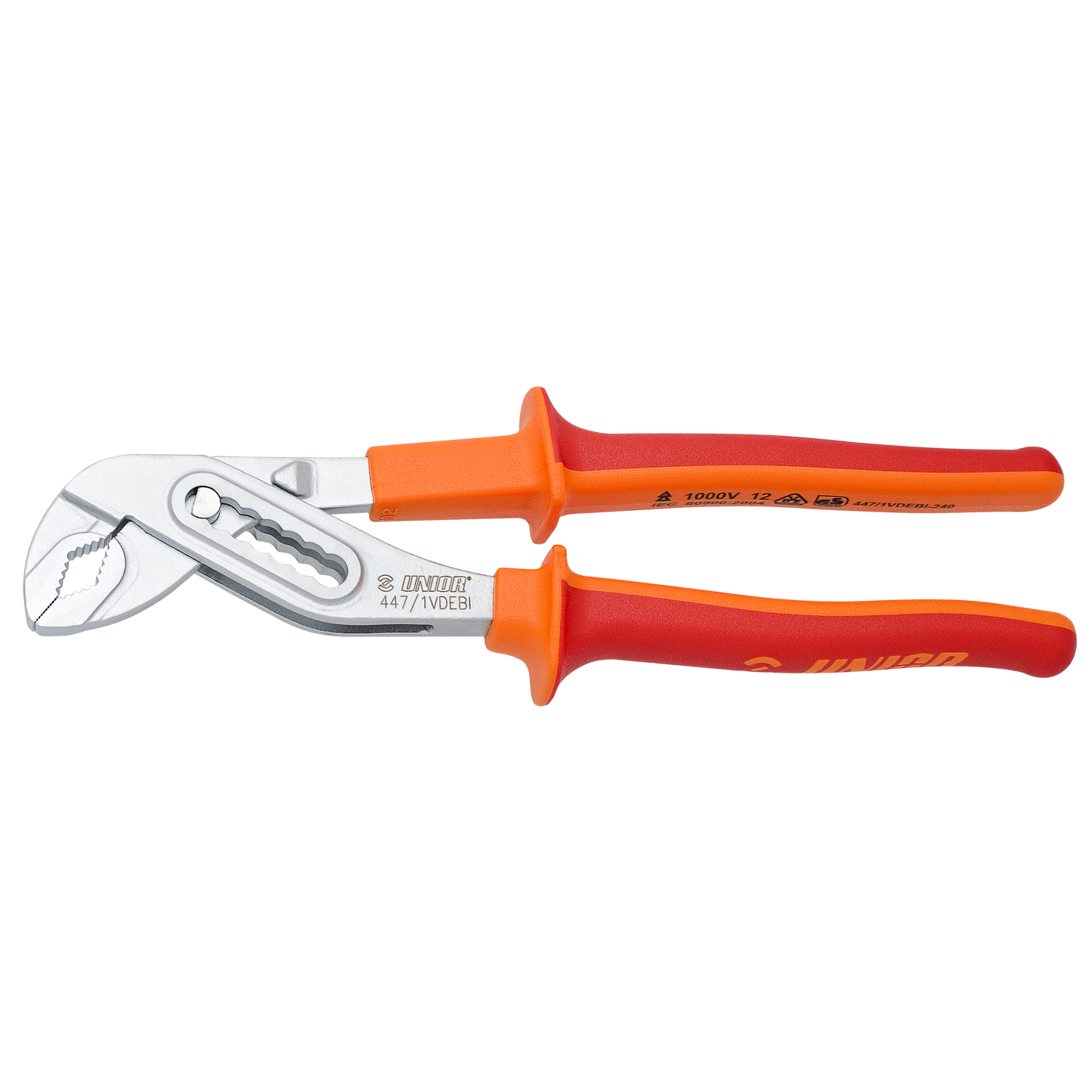
On this page
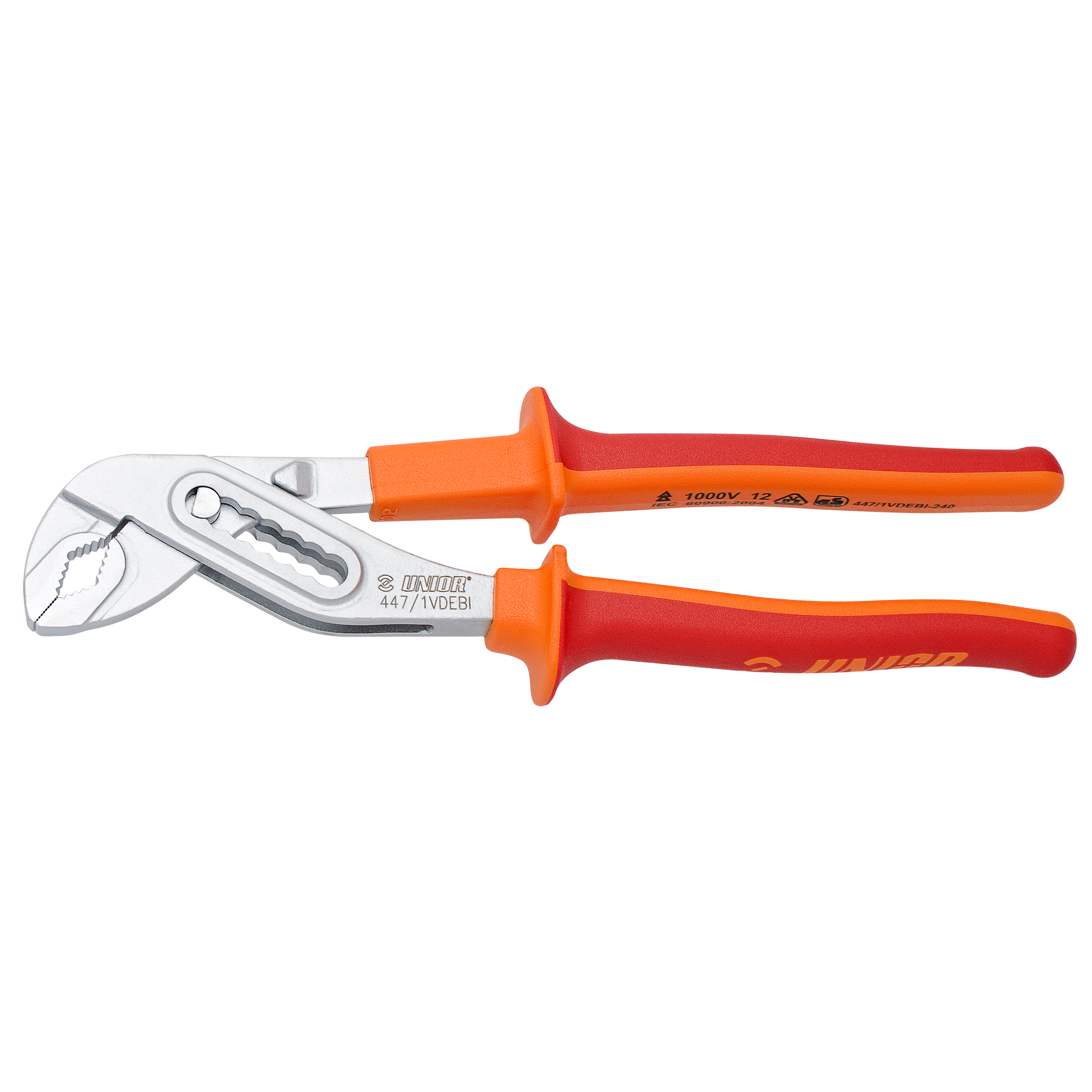
Box-joint pliers are the right answer when a stuck pedal axle nut, a rounded-off lockring, or a stubborn seatpost binder needs more bite than a parallel-jaw can deliver. The 447/1 pairs the wide-grip adjustability of a slip-joint design with the heavier jaw geometry needed for forcing a fastener that's already past polite removal.
What it does well
The seven-position box-joint jaw covers a 35 mm grip range without rocking off the workpiece. The jaw face is serrated rather than smooth; the trade-off compared to the parallel-jaw pliers is that the box-joint gives more grip but will leave teeth marks on a finished surface. That's a feature when you're trying to break a stuck pedal axle loose; a problem when you're working on a polished crank arm.
The 240 mm overall length gives leverage that a shorter slip-joint plier cannot. The chrome-vanadium body is forged, not stamped; the weight in the hand is what tells you the tool is meant for force work.
Where it earns its space in the bike shop
- Stuck seatpost extraction. Grip the seatpost cap or above the binder; the serrated jaws bite without slipping.
- Rounded-off pedal axle nuts. When a 15 mm pedal wrench has cammed the nut, the box-joint can still grab the flats.
- Stuck quick-release skewer nuts. Hold the nut while you spin the lever shaft.
- Service-station improvisation. When the dedicated tool is missing or the bench-clamp doesn't fit, the wide grip range covers most workshop fasteners.
When to choose this over the parallel-jaw plier
Pick the box-joint plier when:
- Grip strength matters more than surface finish.
- The workpiece is already damaged or out-of-spec (rounded off, stripped).
- The job calls for leverage; 240 mm is the lever-arm.
Pick the parallel-jaw plier when surface finish matters; the smooth jaws and cam-action parallel close don't mar a workpiece that needs to stay presentable.
Specs
- Length: 240 mm
- Construction: drop-forged chrome-vanadium steel
- Jaw positions: 7
- Maximum grip capacity: 35 mm
Made in Slovenia, since 1919
Unior has been forging hand tools in Zreče since 1919, and sponsors professional road and mountain-bike race teams. The chrome-vanadium body is forged from a billet on the same press that produces the parallel-jaw sibling; the difference between the two is the jaw geometry and the surface finish, not the underlying metallurgy. A heavy plier feels deliberate in the hand because it is; the weight comes from the forging step, which is what makes the jaw resist fatigue cracking under the kind of load that breaks a stuck pedal loose.
Pro tip from our mechanics
A stuck seatpost almost always needs the box-joint, not the parallel-jaw. The decision tree for which plier handles which job lives here: Pliers for bike work →.
