


A two-point checker counts roller slop as chain stretch; three contact points let the 1644/6 single out pin elongation, the number the replacement call rests on. Each stamped end is a drivetrain call: 0.5% for 11- to 13-speed (SRAM flat-top included), 0.75% for 6- to 10-speed; if a side drops in, the chain comes off.
In stock
Couldn't load pickup availability
Free US shipping on orders $75+
Some exceptions apply — see shipping policy
Forged in Zreče, Slovenia since 1919. Sponsors professional road and mountain-bike race teams.
View full details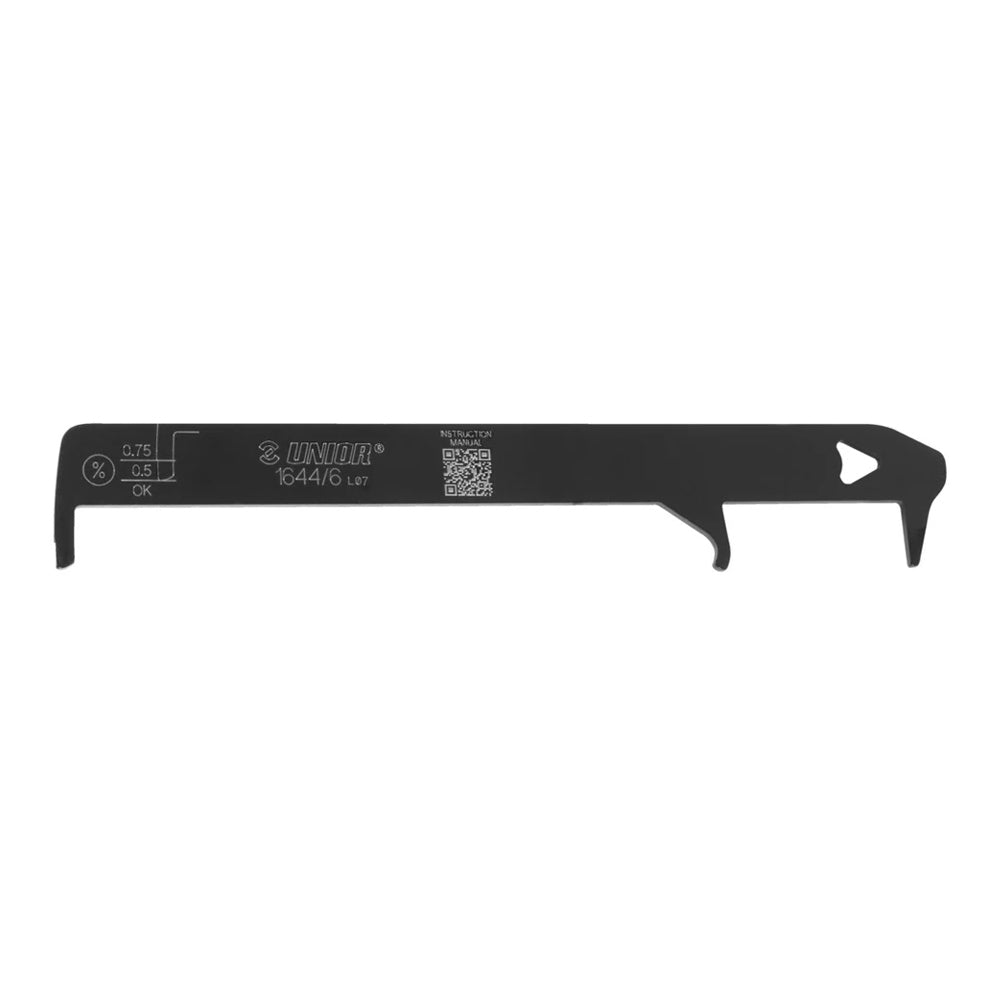
On this page
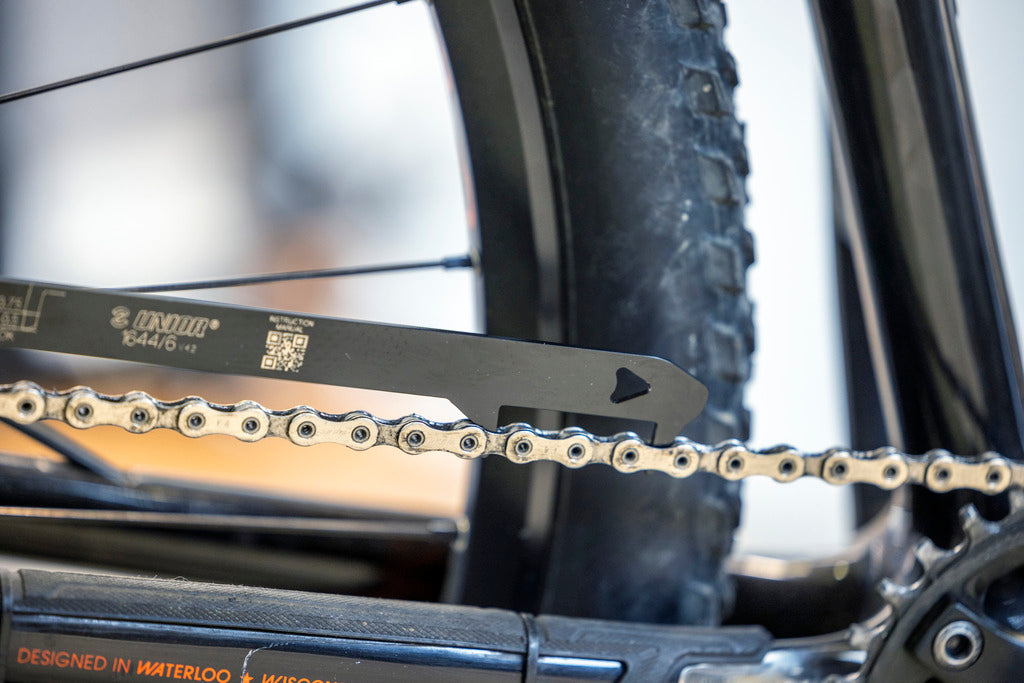
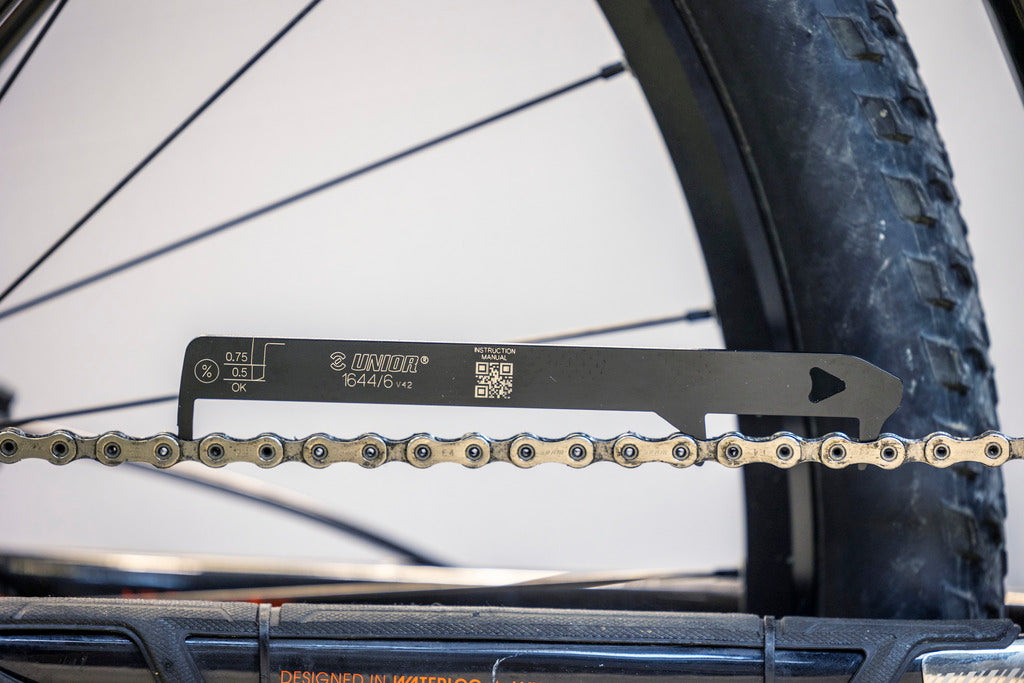
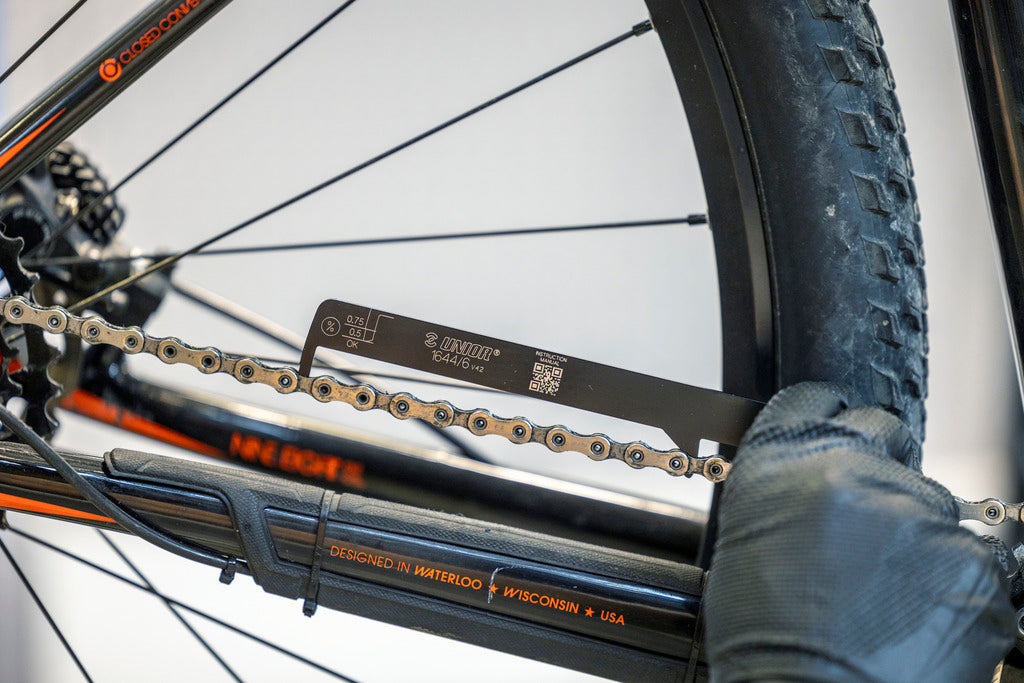
A chain doesn't tell you it's worn. It elongates a few thousandths of a millimeter at every pin, and by the time the cassette starts skipping under load the damage is already done. The Chain Wear Indicator 1644/6 is the small tool that catches the moment before that happens. Drop it into the chain, push down gently, and the gauge gives you a yes-or-no answer in about three seconds.
The reason this one reads the chain honestly is the three-point geometry. Most wear gauges register pin-to-pin distance and call it elongation, but a chain with worn-out rollers and tight pins reads false-positive on a two-point tool: the rollers sit loose against the gauge, and the gauge drops in. The 1644/6 uses a three-point design that isolates pin elongation from roller wear, so the reading reflects the actual chain-stretch number rather than the sloppier proxy.
How to read it
Two thresholds are stamped on the tool, one at each end:
- 0.5% side for 11-, 12-, and 13-speed chains. Modern narrow-spaced chains start damaging the cassette before they hit 0.75%, so the replacement trigger moves earlier.
- 0.75% side for 6- through 10-speed chains. The wider cog spacing gives the chain a little more room before the deformation cascade starts.
If the 0.5% side drops in on an 11-speed chain, the chain goes. If the 0.75% side drops in on a 9-speed chain, same call. If neither drops in, the chain is still inside its service window. A QR code on the body links to a usage video for the moments when the answer feels closer than that.
Compatibility
Every 6- to 13-speed derailleur chain in current production, including SRAM AXS flat-top chains. The three-point design is geometry-agnostic; what differs across speeds is the threshold to read against, not the way the tool sits in the chain.
Specs
- 6-13 speed derailleur chains; SRAM flat-top
- Precision laser-cut steel
- 178 × 45 × 29.4 mm
- 20 g
- Article number: 1644/6
- QR code with video usage instructions printed on the body
Built in Zreče, Slovenia
Unior has been forging hand tools in Zreče since 1919, and sponsors professional road and mountain-bike race teams. The dual-threshold pair stamped on the 1644/6 matches what current chain manufacturers publish for narrow-spaced and legacy drivetrains; the three-point geometry is the design call that makes the tool useful at both ends. It's a small piece of laser-cut steel that does one job, and it does it more accurately than the gauge in the bottom of your toolbox.
Pro tip from our mechanics
The 0.5% vs. 0.75% split is where most home mechanics get the call wrong; the older single-threshold gauges are calibrated to swap a chain later than a modern 11- or 12-speed drivetrain wants. The 1644/6 reads the right threshold for the right chain, but knowing which threshold applies to which bike is the part that's not on the tool. Our chain-replacement guide covers when each threshold applies, what's happening to the cassette teeth in the gap between them, and how to break and reinstall cleanly once the call is made: When and how to replace your chain →
FAQ
At what wear point should a SRAM 12-speed chain be replaced? Like all 11-, 12-, and 13-speed chains, SRAM 12-speed chains (flat-top included) are read against the 1644/6's 0.5% end; the moment that side drops into the chain, the chain is due. The 0.75% end is for 6- to 10-speed drivetrains only.
Why does the 1644/6 carry both a 0.5% and a 0.75% threshold? Each end matches a drivetrain generation. Narrow-spaced 11- to 13-speed chains begin damaging the cassette before 0.75%, so their replacement trigger moves up to 0.5%, while 6- to 10-speed chains get enough room from their wider cog spacing to run to 0.75%.
What does a three-point chain checker measure that a two-point gauge misses? The difference is what the gauge touches. Resting on two points, a checker can be fooled by loose rollers into condemning a chain whose pins are still tight; the third contact point takes the rollers out of the reading, so what's left is genuine elongation at the pins.
 Tech Tips
When and how to replace your chain
Tech Tips
When and how to replace your chain
