


In stock
Couldn't load pickup availability
Free US shipping on orders $75+
Some exceptions apply — see shipping policy
Forged in Zreče, Slovenia since 1919. Sponsors professional road and mountain-bike race teams.
View full details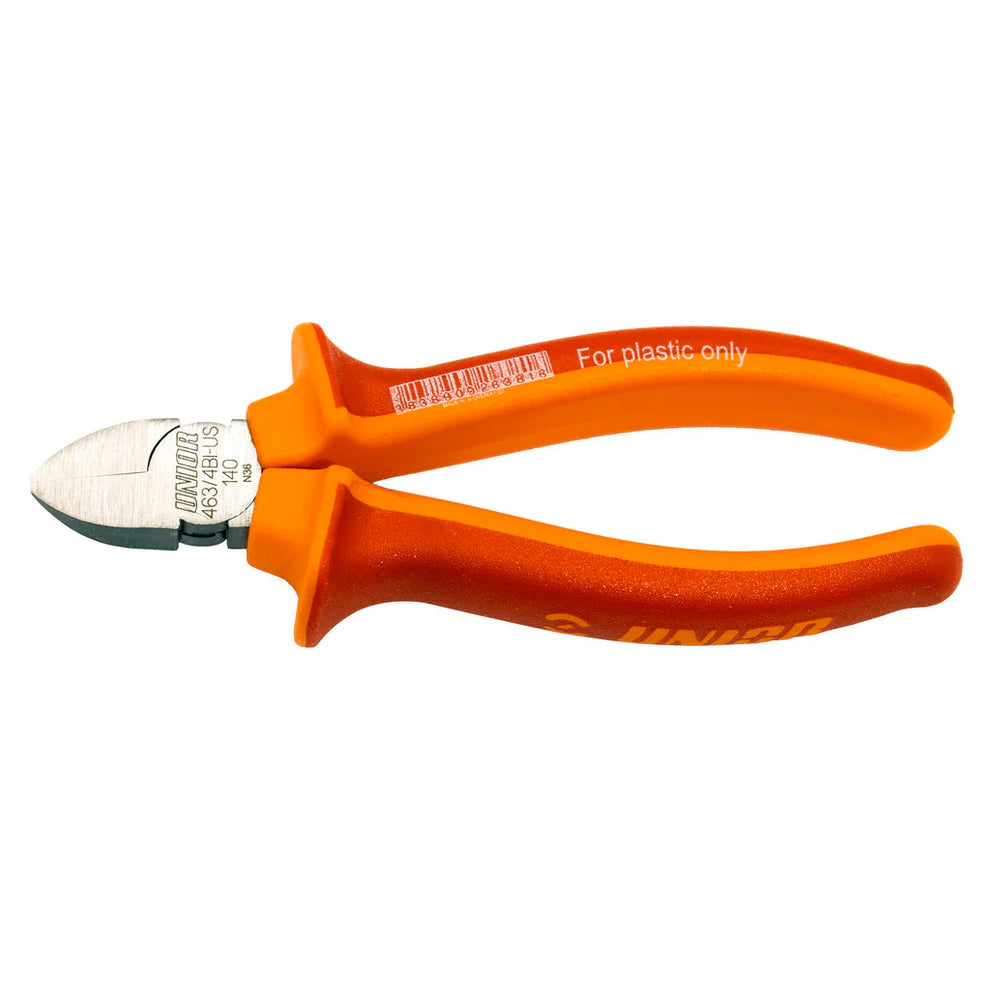
On this page
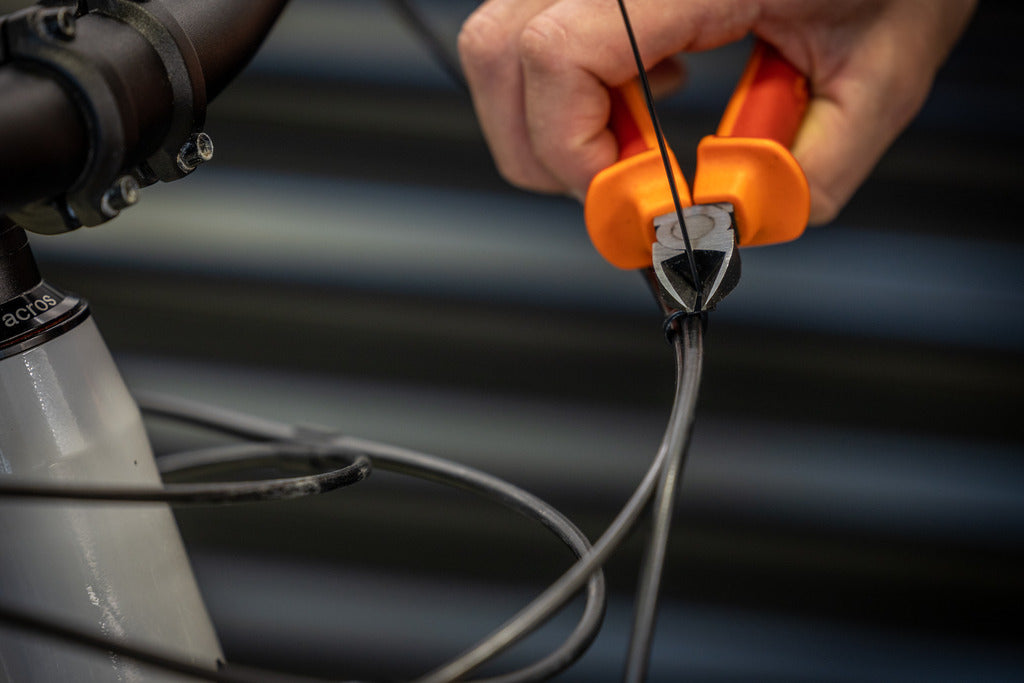
A zip-tie finished with sharp uncut tails is the visual signature of an unfinished build. A zip-tie cut flush with the head looks like a part the frame manufacturer specified. The difference is the cutters used. Standard side-cutters leave a stub. Flush cutters cut against the tie's surface and leave nothing.
The 463/4BI-US is the cutter that does this job and a few related ones: cable-tie cleanup, brake-housing-end trimming where you want a clean square cut, plastic cable-end caps. The cutting edges are induction-hardened on a drop-forged premium-plus carbon-steel body. The result is an edge that stays sharp through years of zip-tie work where lower-grade cutters dull after a single build.
What induction-hardening does
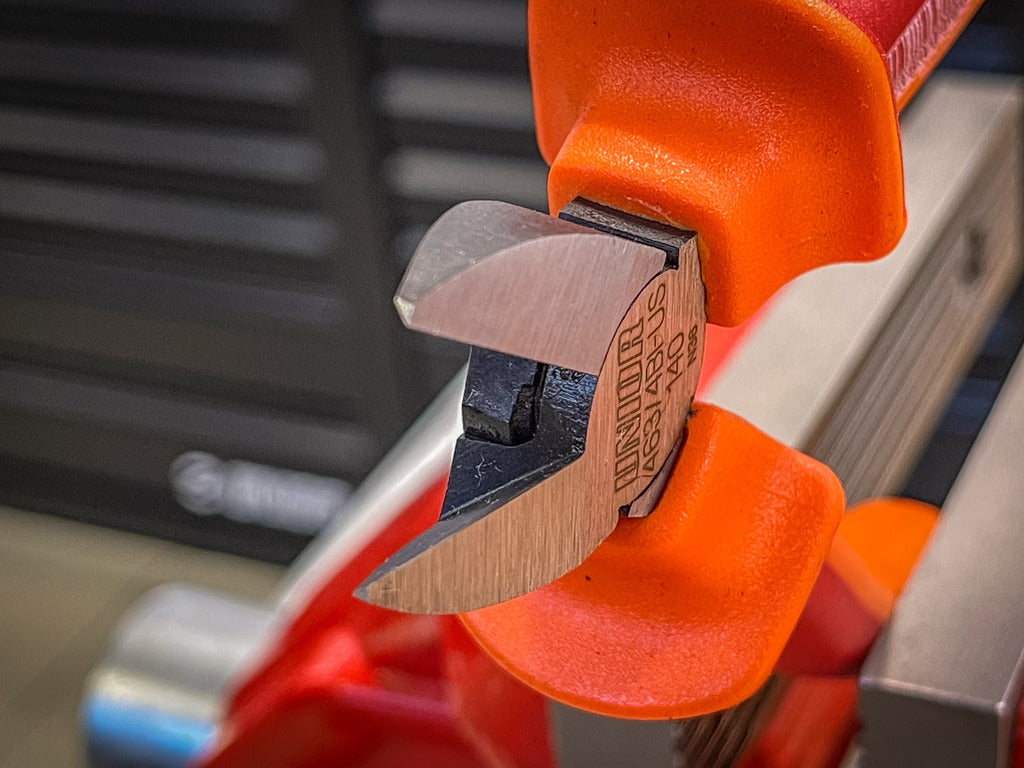
The cutting edge of a flush cutter is the highest-stress part of the tool. Each cut concentrates load on the leading 0.5–1 mm of the edge profile. A cutter that's hardened uniformly across the whole body would be brittle along the working edge and would chip. The 463/4BI-US's edges are induction-hardened separately from the body: the body stays tough (resists impact and torsion), the edges are hardened harder than the body (hold a sharp profile through long use). This is the standard approach for any cutting hand-tool that has to survive both impact and edge-wear.
The handles are heavy-duty double-component (hard core for torque transmission, soft outer for grip). The cutter's cutting geometry is flush on one side and slightly angled on the other; flush against the surface you're trimming, angled away on the waste side. That's the geometry that gives the flush cut.
When to use it
- Trimming zip-ties flush on a finished build
- Cleaning up brake-housing ends after a cut (knock off the burr left by the housing cutter)
- Trimming plastic cable-end caps
- Cutting cable-tie excess to length before installation when you need a measured length
Not for cutting wire under load (use a proper wire-cutter or cable-cutter), not for cutting hardened steel (use a bolt-cutter), not for cutting carbon fiber (use a hacksaw with the ceramic blade).
Specs
- Induction-hardened cutting edges
- Drop-forged premium-plus carbon-steel body, hardened and tempered
- Heavy-duty double-component handles
- Article number: 463/4BI-US
Built in Zreče, Slovenia
Unior has been forging hand tools in Zreče since 1919, and sponsors professional road and mountain-bike race teams. The 463 family is part of Unior's broader plier line, all of which use the drop-forged-and-induction-hardened construction that distinguishes shop-grade cutters from hardware-store ones. The same construction goes into Unior's chain-rivet pliers and master-link pliers in the cycling-tool catalog.
Pro tip from our mechanics
The flush cutter pays for itself the first time you finish a build where every cable tie is cut clean against the frame. The finish quality reads back to the customer immediately, and the work takes the same total time as cutting with the wrong tool; just nicer to look at after. Our workshop hand tools guide covers the cutter line and the rest of the workshop hand-tool layer: Workshop hand tools every bike shop needs →
