


Unior 812 locksmith hammer, 200 g. Drop-forged premium flex plus carbon steel with an induction-hardened face and peen, lacquered, on an ash handle with Unior's oval wedge, built to DIN 1041. Face 19 mm, 280 mm long, 250 g in the hand; a controlled tap for seating a cup or freeing a stuck race.
Low stock
Couldn't load pickup availability
Free US shipping on orders $75+
Some exceptions apply — see shipping policy
Forged in Zreče, Slovenia since 1919. Sponsors professional road and mountain-bike race teams.
View full details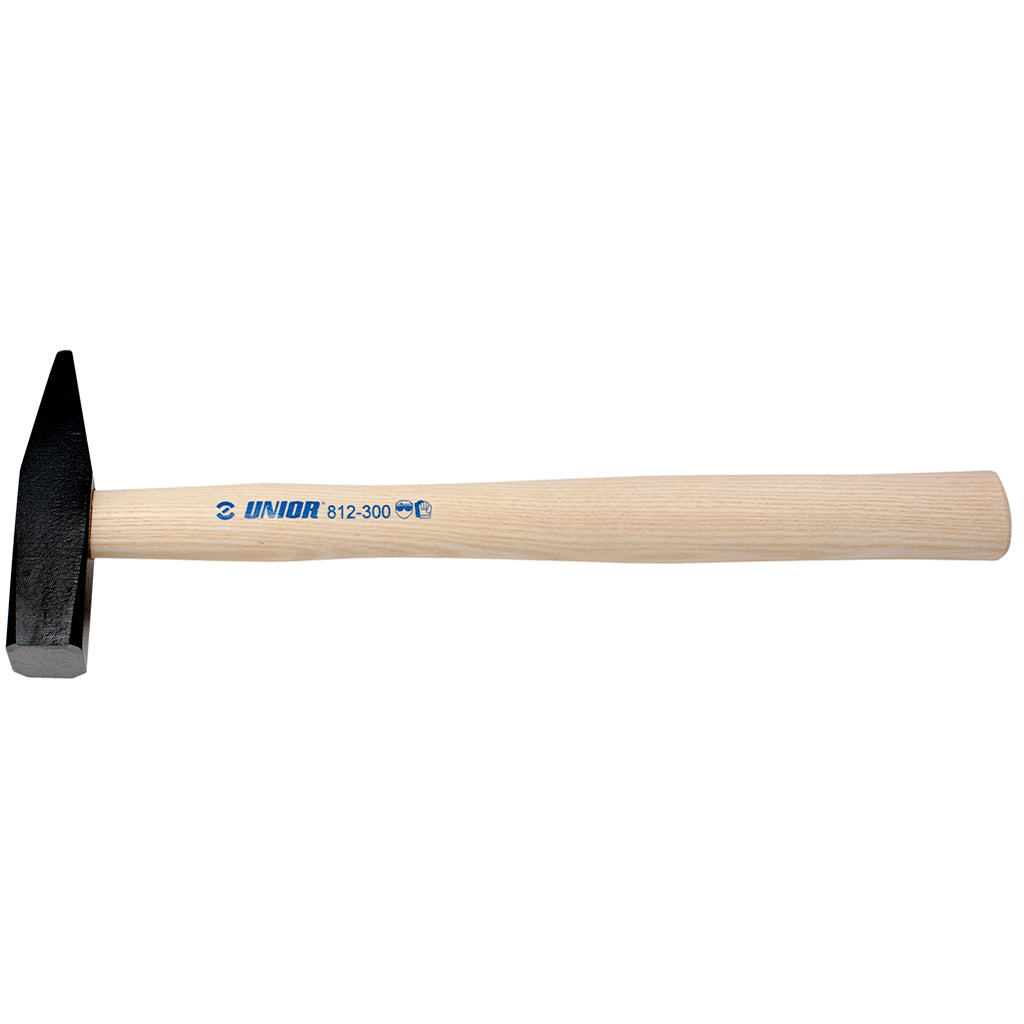
On this page
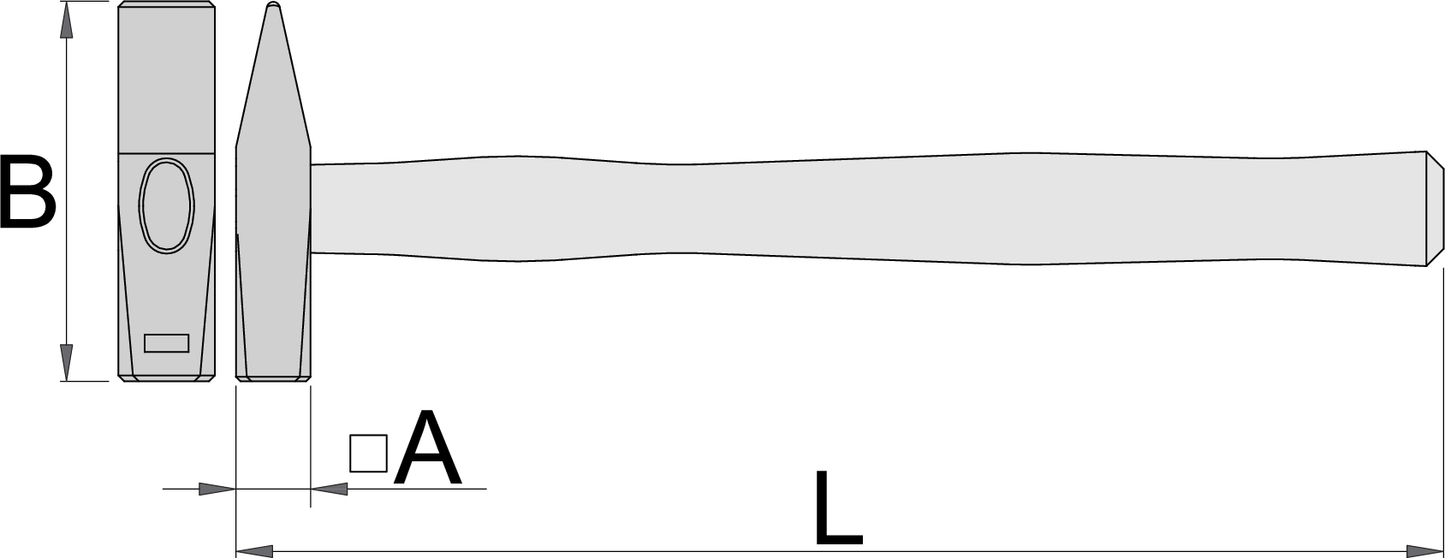
The hammer in a bike shop isn't a framing hammer. The work calls for a small, controlled tap that seats a part without distorting it. This listing is the 200 g size (code 601799): a 19 mm square face, 95 mm head width, 280 mm overall, 250 g in the hand. Large enough to deliver a real tap, small enough not to scuff frame tubes or other parts crowding the workspace.
The 812 Locksmith Hammer is built for that controlled tap. The induction-hardened working face holds shape through years of impact without spalling or denting. An ash handle absorbs shock from the head down through the grip, which after fifty taps at a stuck bearing race is the difference between a wrist that's tired and a wrist that's hurting.
What the locksmith hammer does well
- Seating a press-fit cup that's almost there. A bearing-press gets the cup most of the way home; a couple of measured taps on the leading edge with the hammer seats it the final 0.5–1 mm if needed.
- Persuading a stuck headset cup out of a head tube. Tap the puller's drift evenly around the cup's perimeter; uneven tapping pulls the cup off-axis and binds it tighter.
- Knocking a bearing race loose from a hub shell after a puller has freed it. The puller breaks the fit; the hammer separates the parts.
- Setting a chain-pin partially through a stuck plate. Rare but real on chain tools where the spindle isn't getting enough leverage.
The ash handle is the detail to notice. Ash absorbs shock far better than fiberglass. After a long day of working stuck headsets, the difference between an ash-handle hammer and a fiberglass one shows up in your forearm.
Sizing
This US listing is the 200 g size only. Unior's 812 family also covers 100 g through 2000 g on the factory page; those other codes are not stocked here.
Specs
- 19 mm square face (A); 95 mm head width (B); 280 mm overall length (L); induction-hardened face and peen on drop-forged premium flex plus carbon steel, lacquered
- Induction-hardened face
- Ash wood handle with Unior's oval wedge
- Article 812, code 601799: 200 g head, 250 g tool; DIN 1041. Official spare handle 812.1 and wedge 812.2 are not stocked on uniorusa.com
Built in Zreče, Slovenia
Unior has been forging hand tools in Zreče since 1919, and sponsors professional road and mountain-bike race teams. The locksmith hammer line is one of those workshop fundamentals Unior has been forging from before the cycling-tools division ever existed. The same hardening process that goes into the chain-rivet plier heads goes into this hammer's working face.
Pro tip from our mechanics
The "tap-tap-tap" register a working mechanic uses on stuck parts is the controlled-impact rhythm a real shop hammer enables. A heavy framing hammer can't deliver light taps without overshooting; the small locksmith's hammer can deliver heavy ones with the right swing. Range matters more than mass. Our workshop hand tools guide walks through the impact-tool layer of a working shop: Workshop hand tools every bike shop needs →
FAQ
What size is this 812 locksmith hammer? This page is the 200 g size, Unior code 601799. Official dimensions: face thickness (A) 19 mm, head width (B) 95 mm, overall length (L) 280 mm, tool weight 250 g. The factory 812 family also lists 100 g through 2000 g; those other codes are not stocked on this listing.
What is the head made of, and what standard does it meet? Premium flex plus carbon steel, drop-forged, with the striking face and peen induction hardened and the surface lacquered. Unior makes the 812 to DIN 1041. The handle is ash wood with Unior's oval wedge. Lifetime warranty on the Unior hand tool.
Can I buy a replacement handle? Unior lists two factory spares: 812.1 (ash wooden handle with wedge; the 200 g head takes code 605102) and 812.2 (the wedge alone). Neither spare is stocked on uniorusa.com. Official safety copy: do not use a handle that is rough, cracked, broken, splintered, or loose on the head.
Do I need eye protection, and what is this hammer for on a bike? Yes. Unior's own FAQ says wear goggles, because small parts of the workpiece can break off. On a bike it is the small shop hammer for a controlled tap: seating a press-fit cup the last fraction, walking a headset-cup puller, or freeing a race the puller has already broken loose. Do not strike one hammer with another, and do not grind, weld, or reheat-treat the head.
 Tech Tips
Bearing and headset service: a workshop guide
Tech Tips
Bearing and headset service: a workshop guide
