


In stock
Couldn't load pickup availability
Free US shipping on orders $75+
Some exceptions apply — see shipping policy
Forged in Zreče, Slovenia since 1919. Sponsors professional road and mountain-bike race teams.
View full details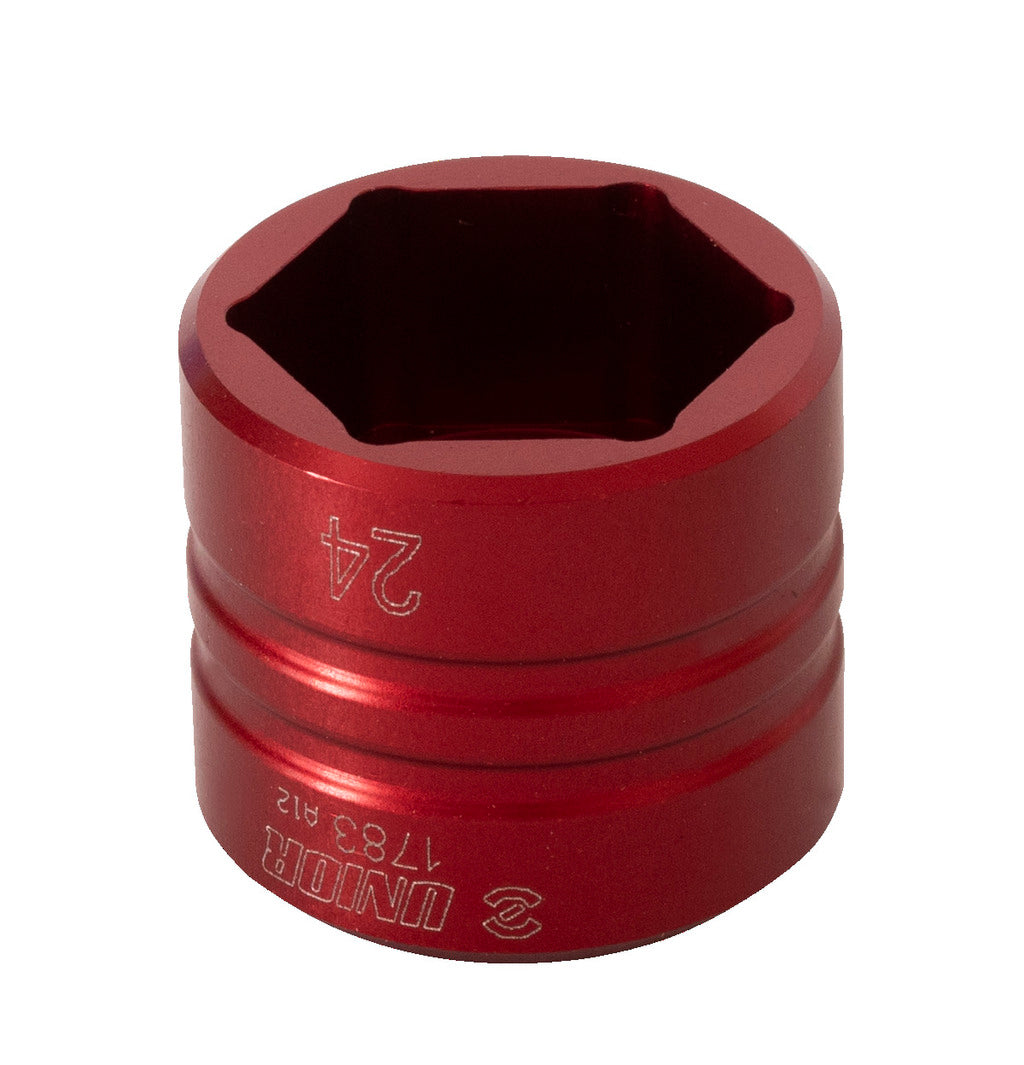
On this page
Suspension fork top caps are the small hex-headed lid that seals the fork's air-spring chamber or compression-damper assembly. Service the fork and the top cap comes off; reseat the fork and the top cap goes back on. The work is routine, but the cap itself is the most-overlooked vulnerability in the workflow: a standard deep-well socket on a low-profile top cap engages only the cap's outer edge, and as you put torque into the socket the cap deforms under the contact patch.
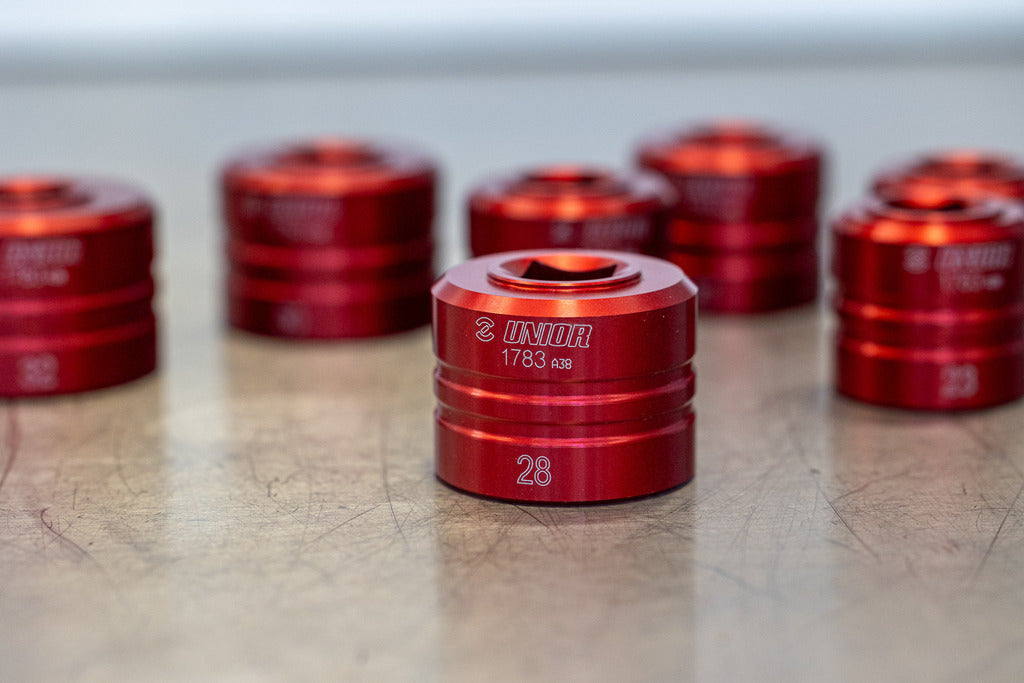
The Suspension Top Cap Socket is the purpose-made tool for these caps. It's CNC-machined from aluminum billet, anodized red for visibility on the bench, and dimensioned specifically for the low-profile hex shapes that suspension top caps use. The socket has no chamfer at the engagement edge; most general-purpose deep-well sockets do, and the chamfer is what introduces play in the engagement on a shallow hex cap.
What "no chamfer" actually changes
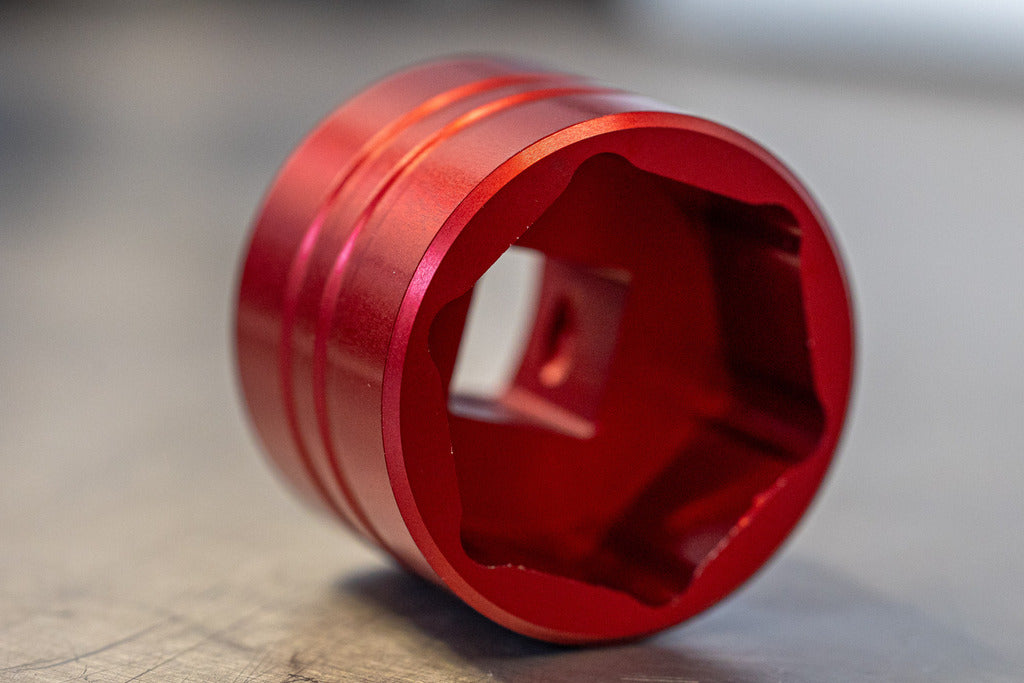
A standard socket has a small bevel (chamfer) at the entry of the hex recess. The bevel makes the socket easier to drop onto a fastener. On a normal fastener, the chamfer is irrelevant because the fastener's hex extends deep enough into the socket that the working engagement is well past the bevel. On a low-profile top cap, the fastener's hex is so shallow that the chamfer takes up most of the engagement length, and there's very little flat-face contact left to transmit torque cleanly. The result on a stuck cap is either rounded cap edges or a socket that slips off.
The no-chamfer design means the full hex engagement length sits flat against the cap face. Combined with the precision-machined inner dimensions, the socket transmits torque without play and without deforming the cap. Even on a stuck cap that's been over-tightened in past service, the engagement holds.
Why short height
Most suspension top caps sit flush or slightly proud against the fork's crown surface. A tall deep-well socket overhangs past the cap face by 20–30 mm, and during wrenching the socket can rock off-axis (especially when applying high torque). The short-height design of the 1783 line keeps the socket centered on the cap throughout the service.
Why aluminum
Aluminum is softer than the steel of the top cap, which means the socket marks (slightly) under heavy load rather than the cap marking. For shop work where the goal is to protect the cap's finish, this is the right trade; the socket is the consumable. Anodized red for visibility against the bench's working surface.
What it accepts
- 1/2" square drive
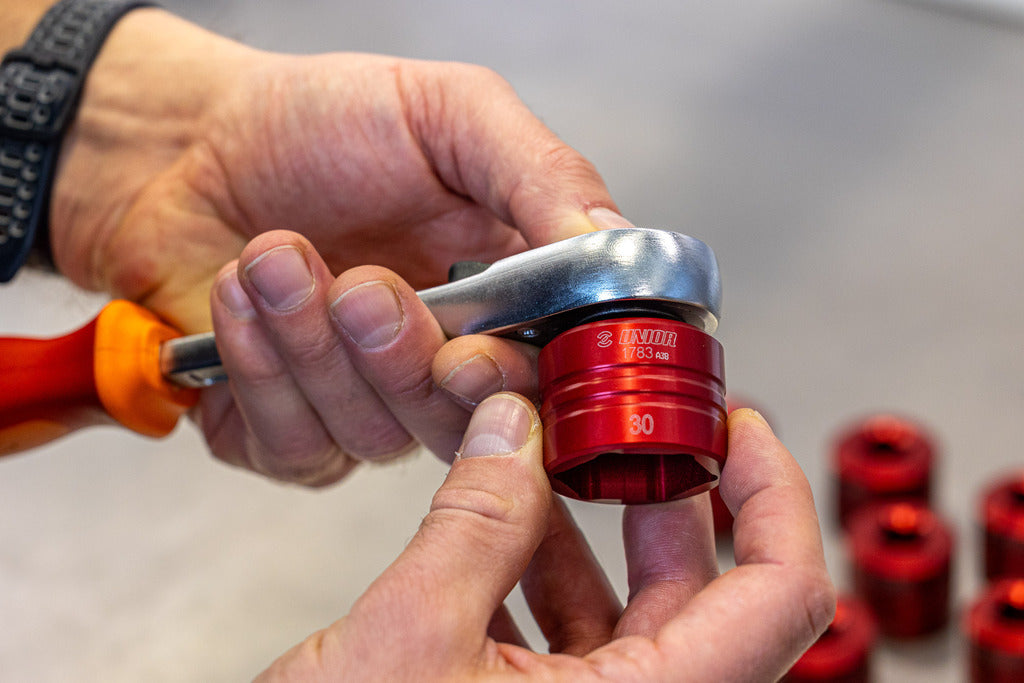
- Compatible with our 1/2" ratchet, torque wrenches at 1/2" drive, or a fixed-handle like Unior's Pro Socket Handle
Specs
- CNC-machined aluminum billet
- Red anodized
- No-chamfer socket design
- Short socket height
- 1/2" square drive
- Article number: 1783 (size varies by socket diameter; see variant)
Built in Zreče, Slovenia
Unior has been forging hand tools in Zreče since 1919, and sponsors professional road and mountain-bike race teams. The 1783 suspension top cap socket line is Unior's purpose-built answer to the low-profile top cap problem; most suspension manufacturers don't publish a recommended tool, and shops working with general-purpose sockets discover the cap-deformation issue the hard way. The 1783 design solves it.
Pro tip from our mechanics
The single best diagnostic for a deformed top cap is to check the cap's outer edge for "rounding" or "spread" before reaching for any tool. If the cap shows previous damage, expect the next service to be harder than the last; the 1783's flat-face engagement is sometimes the only way to remove a previously over-rounded cap. Our workshop hand tools guide covers socket selection and the rest of the workshop hand-tool layer: Workshop hand tools every bike shop needs →
