
In stock
Couldn't load pickup availability
Free US shipping on orders $75+
Some exceptions apply — see shipping policy
Forged in Zreče, Slovenia since 1919. Sponsors professional road and mountain-bike race teams.
View full details
On this page
A pair of working tweezers does the small-part jobs that fingers can't. Fishing a snapped shift-cable end out of a brake-lever barrel adjuster. Pulling an electronic shifter wire through a routing port. Placing fork-bushing shims during a fork rebuild. Picking out a stuck drop of grease, fiber, or metal-shaving from a recessed bearing surface. The tweezers don't replace any larger tool; they fit in the gap where dexterity matters more than torque.
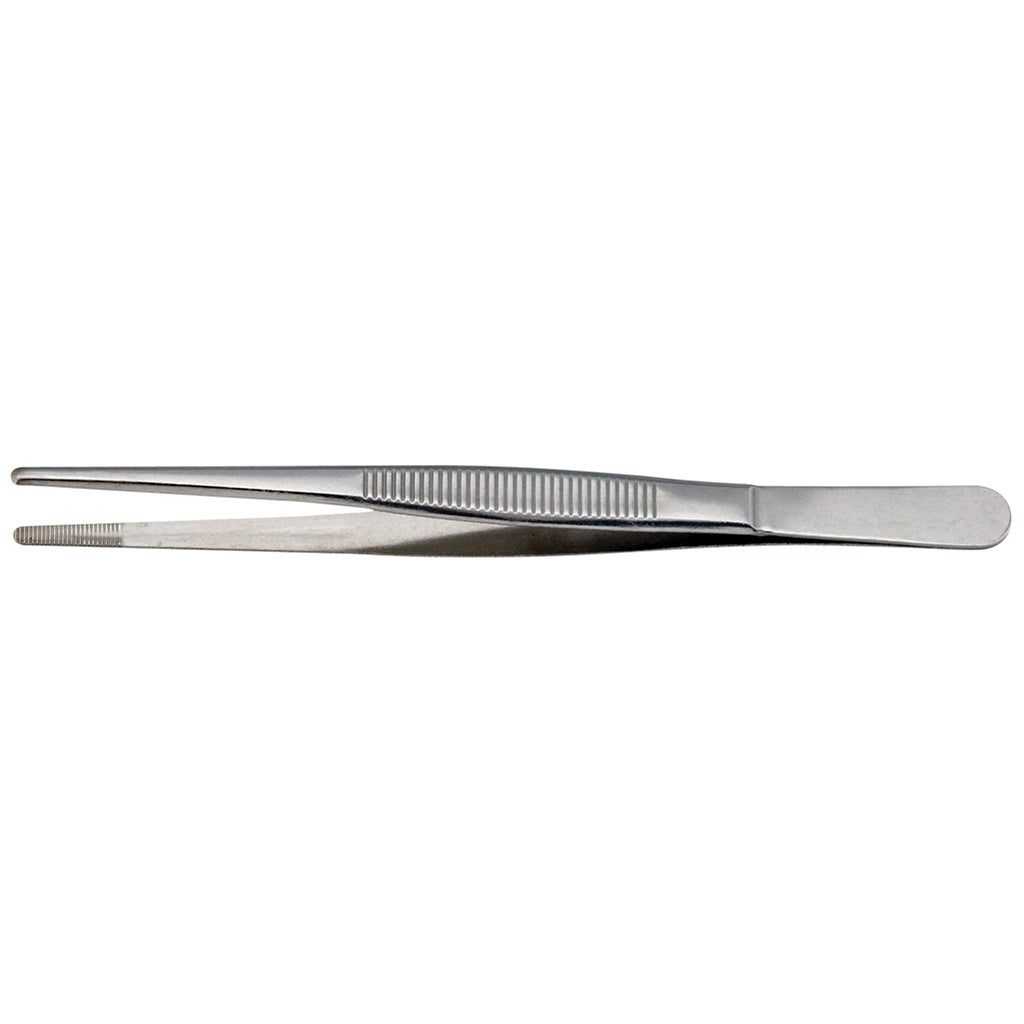
The 1344 tweezers are sized for general workshop use, with tips precise enough for small parts but body length enough to reach into a frame's recessed areas (a fork lower's bushing seat, a derailleur's barrel adjuster, a downtube exit port). The construction is stainless steel; the tips don't rust in damp shop conditions, and the body retains shape after years of grip-and-release work.
Where the tweezers earn their place
- Fishing shift wires (mechanical or electronic) out of frames during routing or service
- Placing fork-bushing shims or fork-lower seals during a fork rebuild
- Picking a snapped cable end out of a barrel adjuster or housing exit
- Lifting an O-ring out of a recessed groove during seal service
- Picking metal shavings out of a freshly tapped thread before installing fresh hardware
- The dozen other "small thing in a small space" jobs a working bench generates
If you've worked on bikes for a while, you don't need to be told what these are for. If you haven't, the tweezers will earn their drawer within the first week.
Specs
- Stainless steel construction
- Precision tips
- Article number: 1344
Built in Zreče, Slovenia
Unior has been forging hand tools in Zreče since 1919, and sponsors professional road and mountain-bike race teams. The 1344 tweezers are one of those workshop tools that doesn't have a specifically-bicycle origin; they're useful in any workshop that handles small parts in tight spaces. The bicycle workshop is one of those contexts; the same tweezers serve electronics work, watchmaking, and similar small-precision trades.
Pro tip from our mechanics
Tweezers are the most-borrowed tool on a working bench, and the one that disappears most quickly. A pair clipped to a magnetic holder near the bench is the working-shop equivalent of "keep them on you"; visible, accessible, hard to lose. Our workshop hand tools guide covers the small-tool layer of a working shop: Workshop hand tools every bike shop needs →
