Bike Torque Wrenches
A bike torque wrench turns a guess into a number. Carbon bars crack under invisible over-torque, alloy stem faces distort when a bolt goes past spec, and crank bolts strip threads or work loose when the load is wrong. Set the wrench to the value the component manufacturer publishes, pull until it signals, and stop. Our slipper-type wrenches click at the set torque; the electronic 266B wrenches show the value on an LCD with a buzzer and a peak-hold readout. Both ranges are built in Zreče, Slovenia. Use the guide below to match a wrench to the work.
Whether you want a click-type or an electronic torque wrench is mostly a question of the signal you prefer: the preset slipper wrenches are the lighter, less expensive pick, while the 266B adds a live readout, a held peak value, and measurement in both directions. Range matters as much as mechanism, so each line splits into a low-range wrench for the bolts under 24 Nm and a high-range wrench for the cassette, cranks, and pedals at 35–50 Nm. Check the published value for the bolt in front of you on our bike bolt torque chart, then use the comparison table and FAQs further down the page to pick the wrench.
Which Unior torque wrench is right for you?
-
One bike, modern cockpit
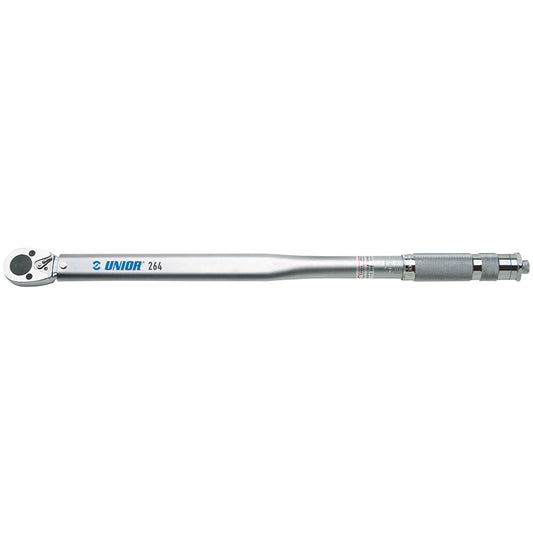
Slipper Torque Wrench 2–24 NmMost fasteners a home mechanic touches sit under 24 Nm: the stem face-plate, the rotor bolts, the seatpost binder, the brake mounts. These are the carbon-sensitive bolts where over-torque does invisible damage. The 2–24 Nm slipper wrench covers that everyday range and clicks the moment you reach the set value.
-
Cassette, cranks and bottom bracket
Slipper Torque Wrench 5–110 NmDrivetrain fasteners live higher up the scale: cassette lockrings at 40 Nm, crank bolts at 35–50 Nm, pedal threads at 35–40 Nm. The 5–110 Nm slipper wrench carries a 3/8″ drive that matches standard cassette and bottom-bracket sockets, so those parts go back on to spec.
-
A digital readout for the bench
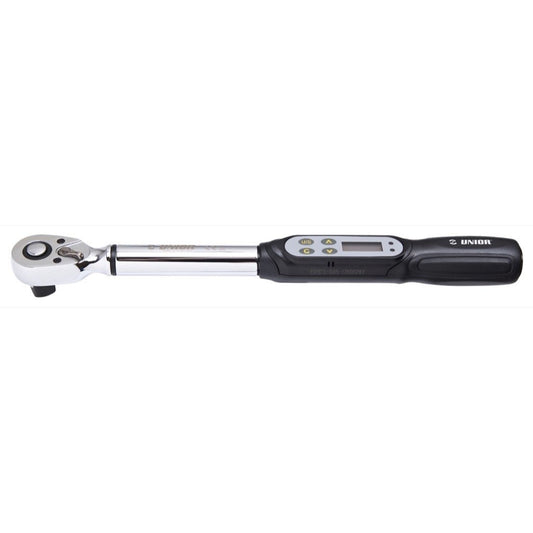
Electronic Torque Wrench 4.2–85 NmThe electronic 266B wrenches show torque on an LCD, sound a buzzer with two LED indicators at the set value, and hold the peak reading. There is no click to interpret. The 1–20 Nm covers cockpit work; the 4.2–85 Nm covers the drivetrain. A bench that services every discipline runs both.
How the four Unior torque wrenches compare
| Wrench | Torque range | Mechanism | Best for | Price |
|---|---|---|---|---|
| Slipper Torque Wrench 2–24 Nm | 2–24 Nm | Slipper click, 1/4″ drive | Cockpit, brake, rotor and seatpost bolts; the carbon-sensitive low range | $114.99 |
| Slipper Torque Wrench 5–110 Nm | 5–110 Nm | Slipper click, 3/8″ drive | Cassette, crank, bottom bracket and pedal torque | $124.99 |
| Electronic Torque Wrench 1–20 Nm | 1–20 Nm | Electronic LCD, buzzer and LED, 1/4″ drive | Cockpit and brake work with a digital readout and peak hold | $289.99 |
| Electronic Torque Wrench 4.2–85 Nm | 4.2–85 Nm | Electronic LCD, buzzer and LED, 1/2″ drive | Drivetrain torque with a digital readout and peak hold | $299.99 |
-
Electronic Torque Wrench 4.2 to 85Nm
Regular price $299.99 USDRegular priceUnit price / perSale price $299.99 USD -
Electronic Torque Wrench 1 to 20Nm
Regular price $289.99 USDRegular priceUnit price / perSale price $289.99 USD -
Slipper Torque Wrench 5 to 110Nm
Regular price $124.99 USDRegular priceUnit price / perSale price $124.99 USD -
Slipper Torque Wrench 2 to 24Nm
Regular price $114.99 USDRegular priceUnit price / perSale price $114.99 USD
Bike torque wrench FAQs
What torque wrench do I need for a bike?
Bike fasteners split into two torque bands, and a working bench usually keeps one wrench for each. The low band, under about 24 Nm, covers cockpit, brake, rotor and seatpost bolts. The high band, above about 25 Nm, covers the cassette, cranks, bottom bracket and pedals. The Unior slipper wrenches are sold as a 2–24 Nm and a 5–110 Nm pair that together reach every torque-controlled fastener on a current bike. For a single bike, the 2–24 Nm handles the everyday work; add the 5–110 Nm when a drivetrain job is due.
What is a slipper torque wrench?
A slipper torque wrench, also called a click or preset type, uses a spring-loaded mechanism set to a target value. You dial in the torque, lock it, and pull. The instant the applied torque reaches the setting, the mechanism releases with an audible and tactile click, and that click is the signal to stop. It measures in one direction only. The Unior 264 series carries a reversible ratchet head for fastener access, but the torque-controlled stroke stays one-way; breaking a stuck bolt loose is a job for a standard ratchet.
Should I choose a slipper or an electronic torque wrench?
Both are precise, calibrated tools; the practical difference is the feedback. The slipper 264 wrenches give a mechanical click at the set value and are the lighter, lower-cost option. The electronic 266B wrenches show the live value on an LCD, sound a buzzer with two LED indicators, and hold the peak reading. They also measure torque in both directions, which a one-way slipper cannot do. A home mechanic rarely needs more than the slipper pair. A shop bench, or anyone who wants a digital number rather than a click, will prefer the 266B.
What torque should bike bolts be?
Every fastener defers to the value its component manufacturer publishes, usually stamped on the part or printed in the service sheet. As a working reference: stem face-plate bolts sit near 5 Nm, six-bolt rotor bolts at 5–6 Nm, seatpost binders at 4–6 Nm, cassette lockrings at 40 Nm, crank bolts at 35–50 Nm, and pedal threads at 35–40 Nm. Carbon parts in particular demand the published number rather than a guess. Our full torque chart, fastener by fastener, is in the bike torque wrench guide.
How often does a torque wrench need recalibration?
Unior publishes a recalibration interval of 12 months or about 5,000 cycles for the 264 slipper series, whichever comes first. A wrench past that interval has an unknown error band, so the calibration is what makes the reading trustworthy. Two habits extend it: reset a slipper wrench to the bottom of its scale after every session so the spring is not stored under load, and never use a slipper wrench to loosen bolts, which works the mechanism against its calibrated direction.