
Low stock
Couldn't load pickup availability
Free US shipping on orders $75+
Some exceptions apply — see shipping policy
Forged in Zreče, Slovenia since 1919. Sponsors professional road and mountain-bike race teams.
View full details
On this page
A bench vise's hardened steel jaws grip steel parts cleanly. They also mark aluminum, titanium, and any polished or finished surface; the steel's tooth profile bites into softer metals on the first squeeze. The 722.1AL Aluminum Jaws solve that by giving the vise a soft-jaw option for finish-sensitive work.
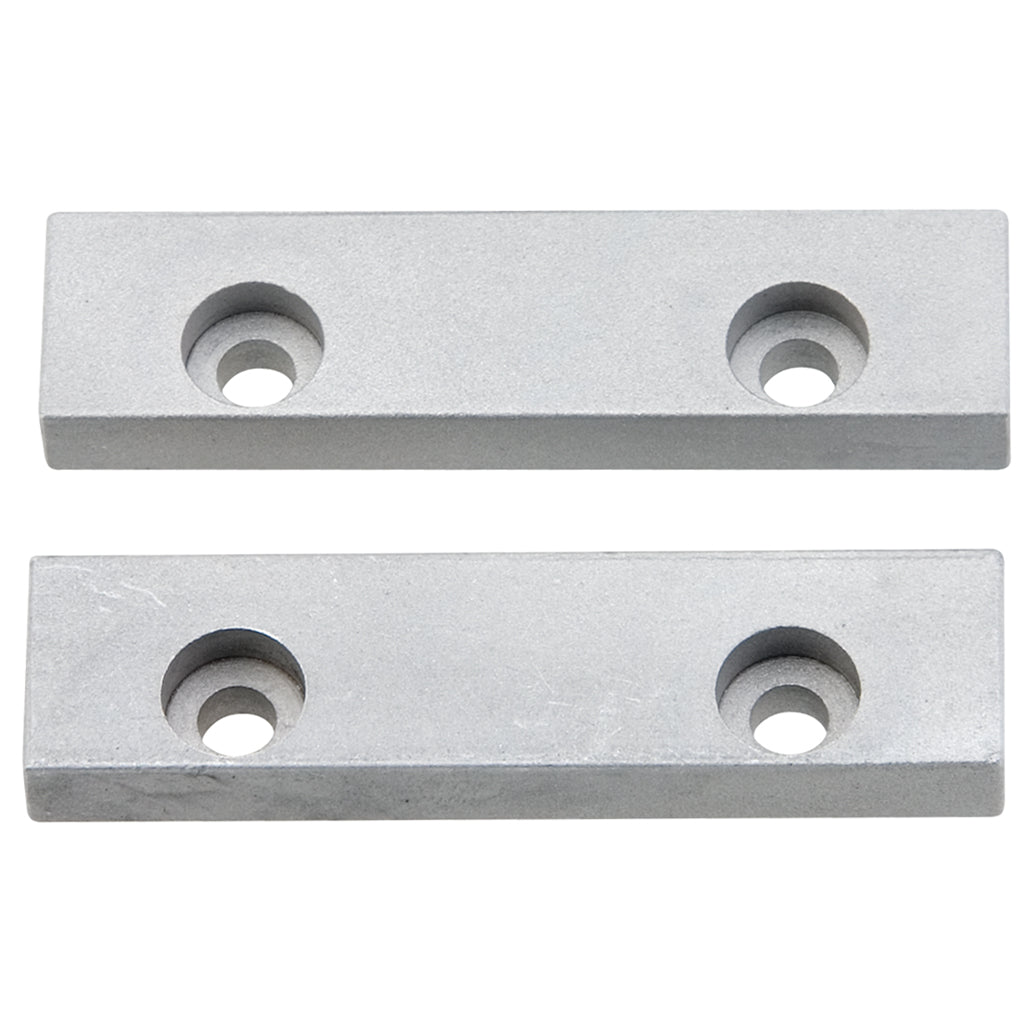
The 722.1AL is a pair of aluminum jaw inserts sized to fit our Irongator Bench Vise 150 mm. The aluminum is softer than the steel jaws but harder than the workpieces it'll clamp (titanium, aluminum, polished steel, polished alloy), so it grips firmly without marking. The jaw inserts slide over the existing steel jaws and lock in place; swapping takes seconds.
When the aluminum jaws are the right call
- Clamping a polished aluminum seatpost during work elsewhere on the bike
- Holding a titanium bolt for removal with a tool whose grip would otherwise mark the head
- Gripping a finished stem during clamp-face scribe or installation
- Clamping a fork crown for steerer-cut work where the crown's finish is visible
- Holding a polished disc rotor on its hub during truing work where the bench vise is the steadying clamp
For raw steel work (steerer cuts on uncoated steel, shock bushing presses, anything where the workpiece isn't finish-sensitive), keep the hardened steel jaws installed. The aluminum jaws are for the finish work; the steel jaws are for the structural work.
Why aluminum vs. brass or rubber
Brass jaws are softer than aluminum, which mark less but also grip less. Rubber jaws are softest of all, which means almost no marking but also significant slip under load. Aluminum is the working compromise: hard enough to grip firmly under the load a bike-shop vise typically delivers, soft enough not to mark a polished anodized seatpost.
For very specific finish-protection tasks (rubber-jaw clamping of a fragile electronic component, brass-jaw work on a precision instrument), buy a dedicated set; but for general bike-shop finish work, aluminum is the right choice.
Specs
- Pair of aluminum jaw inserts
- Sized for Irongator Bench Vise 150 mm
- Slides over existing steel jaws
- Article number: 722.1AL
Built in Zreče, Slovenia
Unior has been forging hand tools in Zreče since 1919, and sponsors professional road and mountain-bike race teams. The Irongator vise line and its accessories (including these aluminum jaws) are part of Unior's premium workshop catalog. Same cast-iron-and-hardened-steel construction as the rest of the vise; the aluminum jaws are the workshop accessory that turns the steel-grip vise into a finish-friendly one.
Pro tip from our mechanics
The single best discipline for a working shop is to leave the aluminum jaws installed by default and only swap to the steel jaws when the work specifically demands it. Most bike-shop vise work is finish-sensitive; the aluminum jaws cover the daily flow. The steel jaws are reserved for the harder work. Our workshop hand tools guide covers vise setup and the rest of the workshop hand-tool layer: Workshop hand tools every bike shop needs →
