
In stock
Couldn't load pickup availability
Forged in Zreče, Slovenia since 1919. Official technical partner of multiple World Tour and downhill teams.
View full details
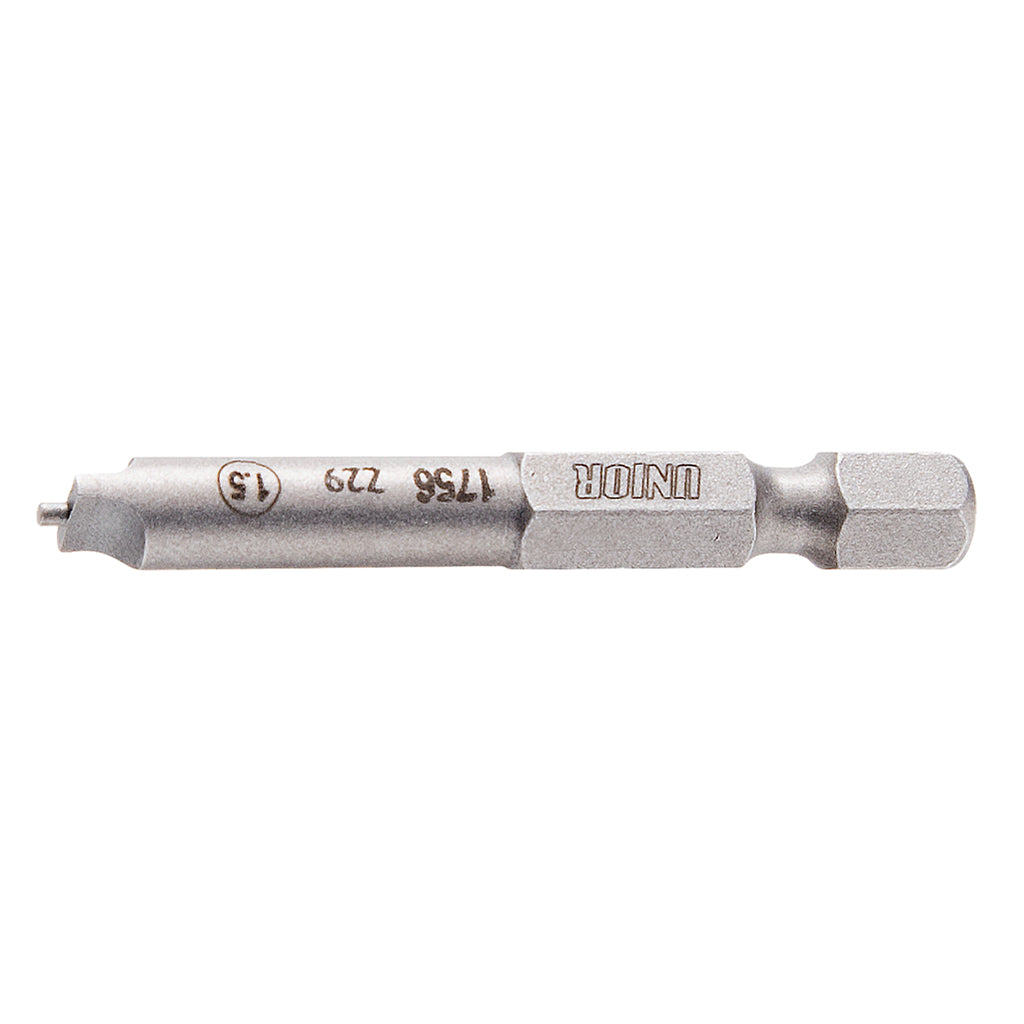
The 1.5 mm Speed Nipple Bit is the smaller of the two cordless-driver bits in the Unior wheelbuilding line. Where the 2.5 mm bit covers standard slot-head internal nipples, the 1.5 mm bit fits the narrower-slot nipples used on some manufacturer-specific wheelsets and a portion of the older European builds where smaller nipple geometries persist.
Same depth-control principle as the 2.5 mm bit: a small nub machined into the tip of the bit keeps the driver centered in the recess and controls how far the nipple threads down the spoke. When the nub touches the approaching spoke, the bit unseats; every nipple ends up at the same starting depth, which is the precondition for an even tensioning pass on the rest of the build.
If your wheelset uses standard slot-head nipples (2.5 mm slot width), the Speed Nipple Bit 2.5mm is the right bit. Check the nipple recess geometry under good light before reaching for a bit; a 1.5 mm bit in a 2.5 mm slot will turn the nipple briefly before stripping the slot, and a 2.5 mm bit in a 1.5 mm slot won't engage at all.
Compatibility
- Nipples: standard slot-head internal spoke nipples, 1.5 mm slot width.
- Drive: 1/4" hex shank.
- Wheels: wheelsets with 1.5 mm slot nipples (some manufacturer-specific builds, older European builds).
- Companion: Speed Nipple Bit 2.5mm for the more common standard slot size.
Specs
- Tip: 1.5 mm slot, machined with depth-control nub.
- Drive: 1/4" hex shank.
- Compatible with cordless screwdrivers, drill drivers, and impact drivers.
Built in Zreče, Slovenia
Unior has been forging hand tools in Zreče since 1919, and is the official technical partner of multiple World Tour and downhill teams. The 1.5 mm speed bit is the variant for the smaller nipple-slot geometry; a less common build choice than the 2.5 mm standard, but the workshop tool of choice when those nipples are on the wheels in front of you. A workshop servicing a wide range of older European builds keeps both speed bits in the drawer; a workshop primarily seeing modern factory wheels can get away with just the 2.5 mm.
Pro tip from our mechanics
The 1.5 mm bit is small enough that visual confirmation of engagement matters more than on the 2.5 mm. Set the bit in the nipple, give it a half-turn by hand to feel the engagement, then bring the driver into play. If the bit is going to walk off, it will walk off in that first half-turn; better to feel it then than to discover it after a few rotations under driver power. The full wheel-building workflow is in How to true a bike wheel →
