What Is a Flare Nut Wrench and What Is It Used For?
What a flare nut wrench is, why fluid-line fittings need its slotted six-point head, how it differs from open-end and box-end wrenches, and which sizes fit bicycle hydraulic brakes.
On this page
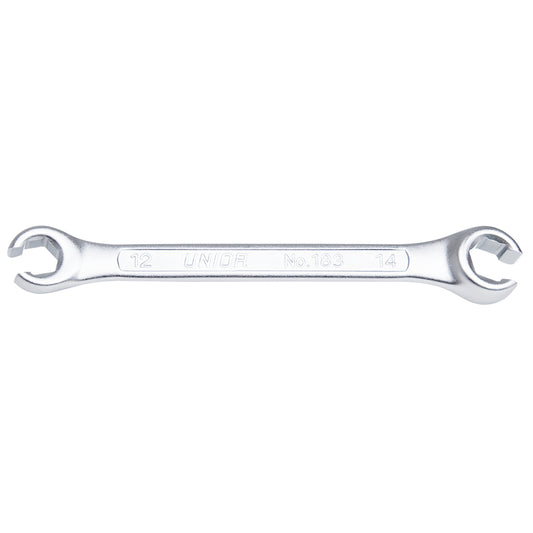
A flare nut wrench is a box-end wrench with a slot cut through one side of the head, so it can slip sideways over a brake line, fuel line, or hydraulic hose and then wrap the nut underneath. The slot is what makes it useful; the wrap is what makes it safe. An open-end wrench pushes on two flats of a nut and lets the corners take the strain, while a flare nut wrench surrounds five of the six flats, so a soft fitting keeps its shape under real torque. If a mechanic has ever asked you to hand them a line wrench, a flare wrench, or a brake-line wrench, this is the same tool under a different name.
The wrench earned its reputation on cars, where brake unions and fuel lines are soft metal threaded onto fluid-filled lines, and round off under an ordinary wrench sooner or later. Bicycles joined that world when hydraulic disc brakes arrived: the compression nut that secures a hydraulic brake line is exactly the kind of small, soft, torqued fitting this wrench exists for. Below: the tool itself, the job it exists for, how it compares with the wrenches you already own, and the two sizes that matter on a bike.
What does a flare nut wrench look like?
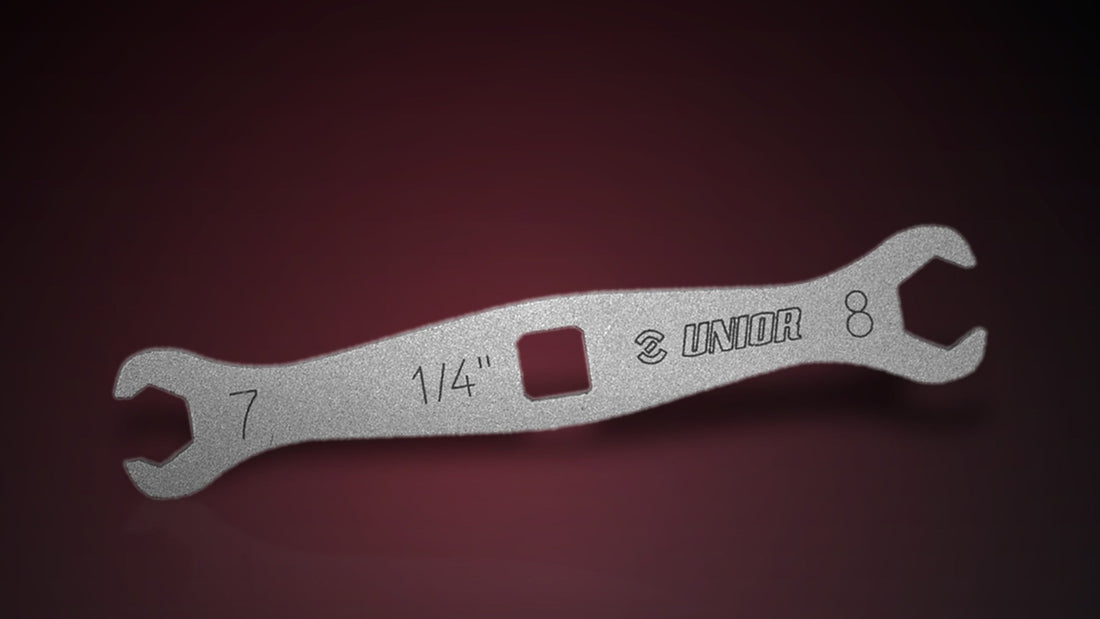
Picture a six-point box-end wrench whose head has a bite taken out of one side. The opening is sized to pass a line or a hose, and nothing more; it's deliberately too narrow to work like an open-end jaw. Most flare nut wrenches are double-ended with a different size at each end, forged from steel, and stockier around the head than an open-end of the same size, because the head has to stay stiff with a slot cut through it.
The six-point profile is no coincidence. Six points put the wrench faces flat against the fitting's flats, where a twelve-point profile would put edges against them, and edges are how soft fittings get chewed. Slide the head over the line, drop it onto the nut, and five of those six faces share the load.
What is a flare nut wrench used for?
Loosening and tightening the nuts on fluid lines without destroying them. The name comes from automotive flare fittings, where the end of a metal tube is flared outward and a nut clamps that flare against a seat to seal it. The nut is usually brass or a soft alloy, it can't come off the line without cutting it, and it has to seal against fluid pressure, so it carries real torque. Soft metal under real torque, on a nut you can't replace: that's the problem this wrench category exists to solve.
A bicycle hydraulic brake presents the same problem in a different sealing design. Bike hoses seal with a compression fitting, a barb inside the hose and a soft brass olive squeezed around it, rather than a true flare. But the compression nut doing the squeezing is just as soft and just as torqued, and the flare nut wrench treats it the same way: hose through the slot, head on the nut, load spread across five faces.
Flare nut wrench vs regular wrench: what is the difference?
| Wrench | Grip on the nut | Gets past a line? | Best use |
|---|---|---|---|
| Open-end | Two flats | Yes, from the side | General fasteners, bleed screws |
| Flare-nut | Five of six flats | Yes, through the slot | Soft fittings on fluid lines |
| Box-end (ring) | All six flats | No, the head is closed | High-torque fasteners with a free end |
The box-end grips best but can never reach a fitting with a line running through it; the open-end reaches it easily and grips it worst. Most of the rounded fittings that come into our workshop are open-end casualties. The flare nut wrench is the compromise the fitting needs: nearly all of the box-end's grip, with just enough opening to get there.
The catch: the slot costs the head some stiffness, so a flare nut wrench is no substitute for a box-end on stubborn, high-torque fasteners. It's a precision tool for fittings that seal fluid, not a breaker bar.
Which flare nut wrench sizes fit bicycle brakes?
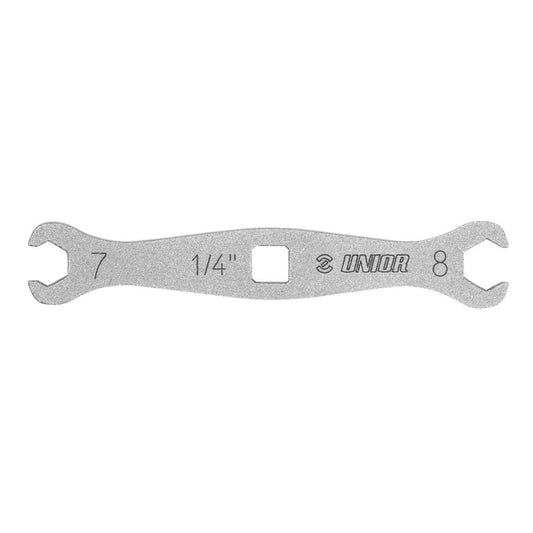
Compression nuts on bicycle hydraulic systems run small and metric: 7, 8, and 10 mm cover the common range, and which of them your system uses depends on the brand and the line it dresses. Between them, two wrenches bracket that range. The Flare Nut Wrench 1760/2 pairs 7 and 8 mm flare ends with a 1/4 inch square drive on its other end, so it plugs straight into a torque wrench. The 8/10mm Flare Nut Wrench 183/2 covers 8 and 10 mm for the larger fittings on many MTB and some current road systems.
Which sizes your brakes take depends on the system; the place to match wrench to fitting, brand by brand, is our wrench-selection guide for hydraulic disc brake service. The short version: between a 7/8 and an 8/10, the common bicycle fitting range is covered.
How tight should a flare nut be?
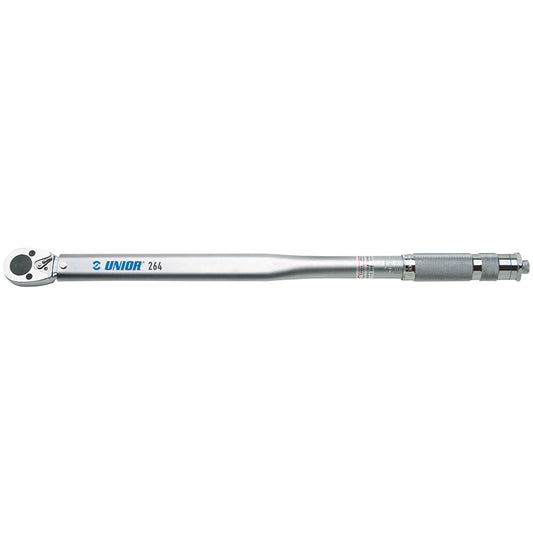
To the brake manufacturer's published torque spec, with a torque wrench, and never by feel; the figure varies by system, so look yours up. A fitting that seals fluid punishes both directions of wrong, which is the deeper reason the 1760/2 carries that square drive: seat it in a calibrated torque wrench, such as the 2 to 24 Nm slipper torque wrench, set the published figure, and the nut lands on spec. If torque tools are new to you, our guide on how to use a torque wrench on your bike covers the technique.
Flare nut wrench FAQ
What is a flare nut wrench used for? Tightening and loosening soft fittings on fluid lines: automotive brake and fuel unions, and on bicycles the compression nuts on hydraulic brake hoses. Its slotted six-point head passes over the line and grips five of the nut's six flats, which keeps soft fittings from rounding.
Is a flare nut wrench the same as a line wrench? They're the same tool. Line wrench, flare wrench, tube wrench, and brake-line wrench are all trade names for a box-end wrench with a slot that admits the line.
Can I use a regular wrench on a brake line fitting? An open-end wrench fits, but it bears on only two flats, which is how soft fittings get rounded. For a fitting you intend to keep, use a flare nut wrench; the open-end is better reserved for bleed screws, which have no line passing through them.
Is a flare wrench the same as a regular box-end wrench? Close relatives, not the same. A box-end head is fully closed and cannot reach a nut that has a hose running through it; the flare wrench gives up one flat of grip in exchange for the slot that gets it onto the fitting.
How tight should a brake line fitting be? Whatever torque your brake's manufacturer publishes, applied with a torque wrench. The fitting has to seal fluid under pressure, and missing the spec in either direction costs you that seal, so the number beats feel.
Unior has been forging hand tools in Zreče since 1919, and sponsors professional road and mountain-bike race teams. The flare nut wrenches in our catalog are the bicycle-sized end of a much older European line-wrench tradition: forged, chrome-plated to wipe clean of brake fluid, and sized to the fittings bicycles actually use.
Pro tip from our mechanics
Before you pull, rotate the wrench so the slot faces away from the direction of force. The cut side of the head is its one weak point, and loading it directly is how a flare nut wrench springs open on a stuck fitting; with the slot trailing, the solid side of the head carries the work. If the fitting still won't move, reach for penetrating oil and patience, not more arm. And when you're ready for the bench side of this subject, torque control on compression nuts and keeping brake-work tools uncontaminated, our guide to choosing the right wrench for hydraulic disc brake service goes deeper than the definition.
Tools used in this guide
Straight from the article — no hunting through the catalog.
-
Flare Nut Wrench
Regular price $13.99 USDRegular priceUnit price per -
 Sold out
8/10mm Flare Nut Wrench
Regular price $9.99 USDRegular priceUnit price per -
 Sold out
Slipper Torque Wrench 2 to 24Nm
Regular price $114.99 USDRegular priceUnit price per -
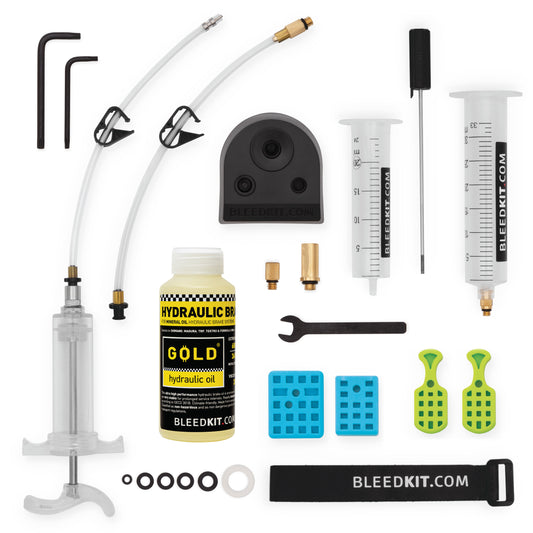
Bleedkit.com Workshop Gold Mineral Oil Master Bleed Kit
Regular price $79.99 USDRegular priceUnit price per
Frequently asked questions
What is a flare nut wrench?
A flare nut wrench is a six-point box-end wrench with a slot cut through one side of the head, so it can slip sideways over a brake line, fuel line, or hydraulic hose and then wrap the nut underneath. It grips five of the fitting's six flats, which keeps soft fittings from rounding under torque. It is also sold as a line wrench, flare wrench, or brake-line wrench.
What is a flare nut wrench used for?
Tightening and loosening soft fittings on fluid lines: brake and fuel unions on cars, and the compression nuts on hydraulic brake hoses on bicycles. The slotted head passes over the line and spreads the load across five of the nut's six flats, so the soft metal keeps its corners through repeated service.
Is a flare nut wrench the same as a line wrench?
They are the same tool. Line wrench, flare wrench, tube wrench, and brake-line wrench are all trade names for a box-end wrench with a slot in the head that lets it onto a fitting with a line running through it.
Can I use a regular wrench on a brake line fitting?
An open-end wrench fits, but it bears on only two of the fitting's flats and concentrates the load on the corners, which is how soft compression nuts get rounded. For a fitting you intend to keep, use a flare nut wrench; open-end wrenches are better reserved for bleed screws, which have no line passing through them.
What size flare nut wrench do bicycle brakes need?
Bicycle hydraulic compression nuts run small and metric: 7, 8, and 10 mm cover the common range. A 7/8 mm flare nut wrench and an 8/10 mm flare nut wrench together bracket it; which sizes your own brakes use depends on the system, so check the manufacturer's service documentation.
Why does a flare nut wrench have a slot in it?
The slot lets the wrench get onto the nut at all. Fittings on fluid lines have a hose or tube running through them, so a closed box-end wrench can never reach the nut; the slot admits the line, and the remaining five faces of the six-point head carry the torque.