


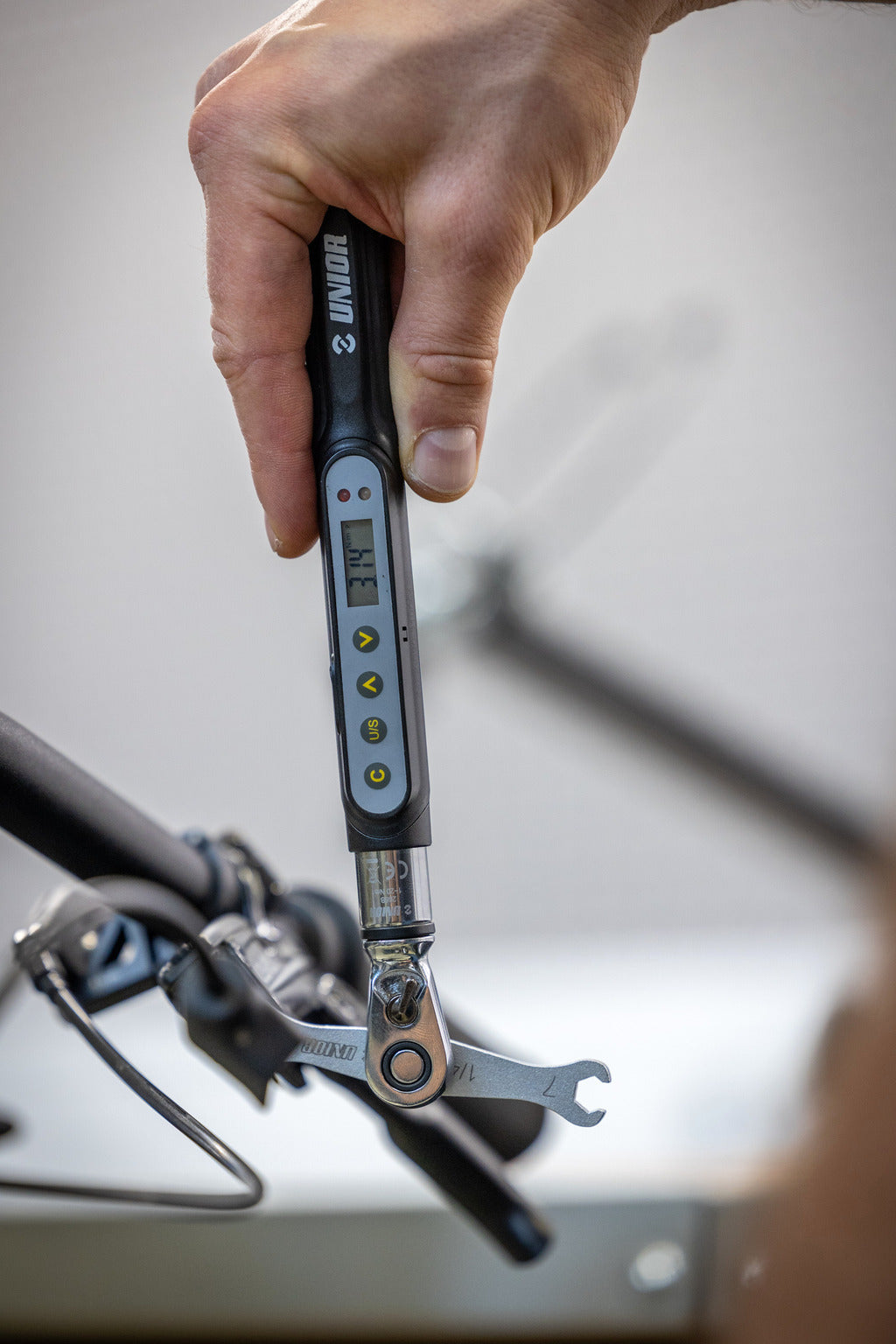
Seven and eight millimeter flare ends wrap a compression nut across five of its six flats, enough contact that a soft fitting keeps its corners under torque. Drop a cycling torque wrench into the 1/4-inch square drive broached through the body and the nut closes on the figure the brake maker publishes, not a guess.
Low stock
Couldn't load pickup availability
Free US shipping on orders $75+
Some exceptions apply — see shipping policy
Forged in Zreče, Slovenia since 1919. Sponsors professional road and mountain-bike race teams.

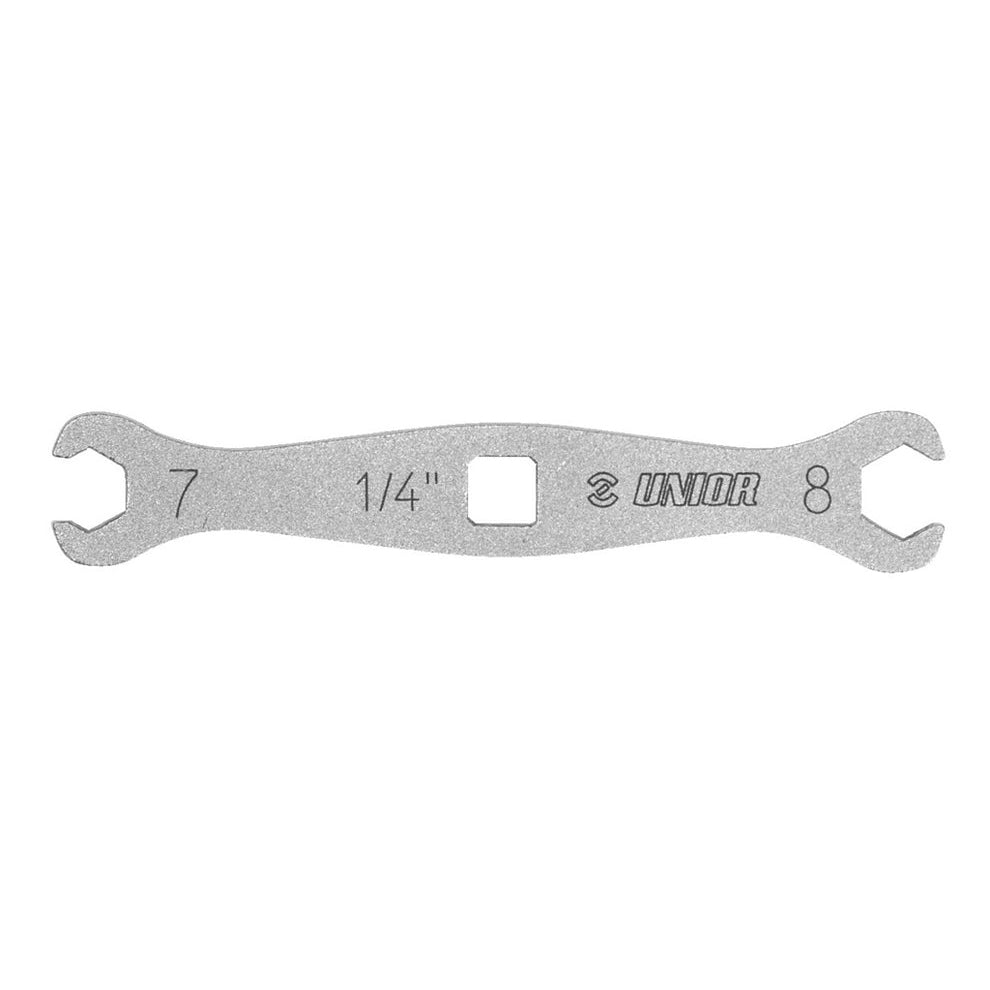
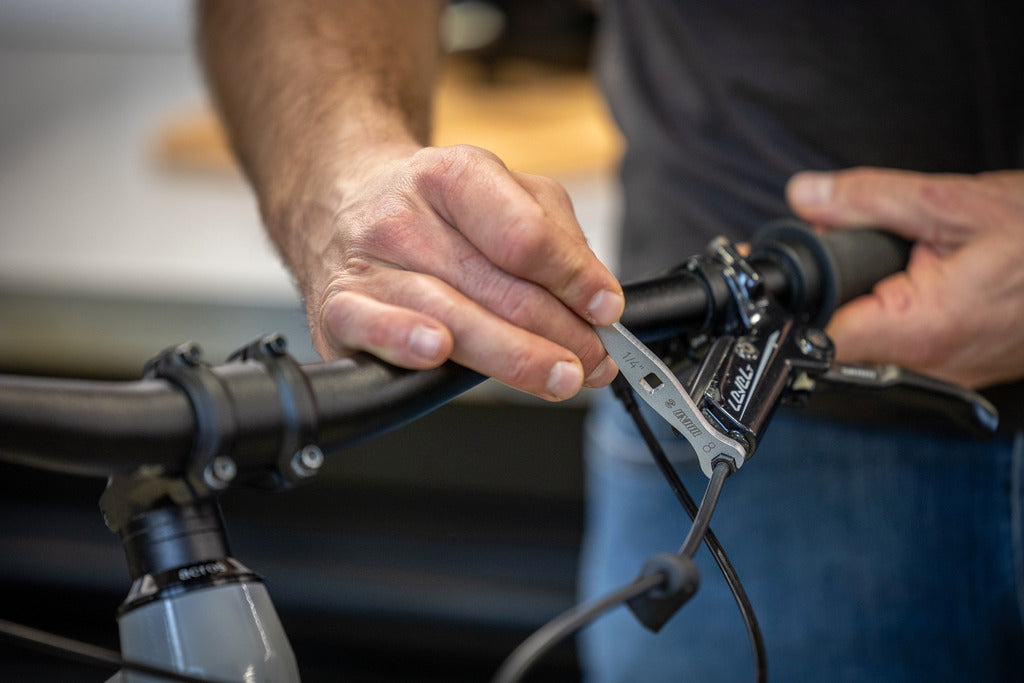


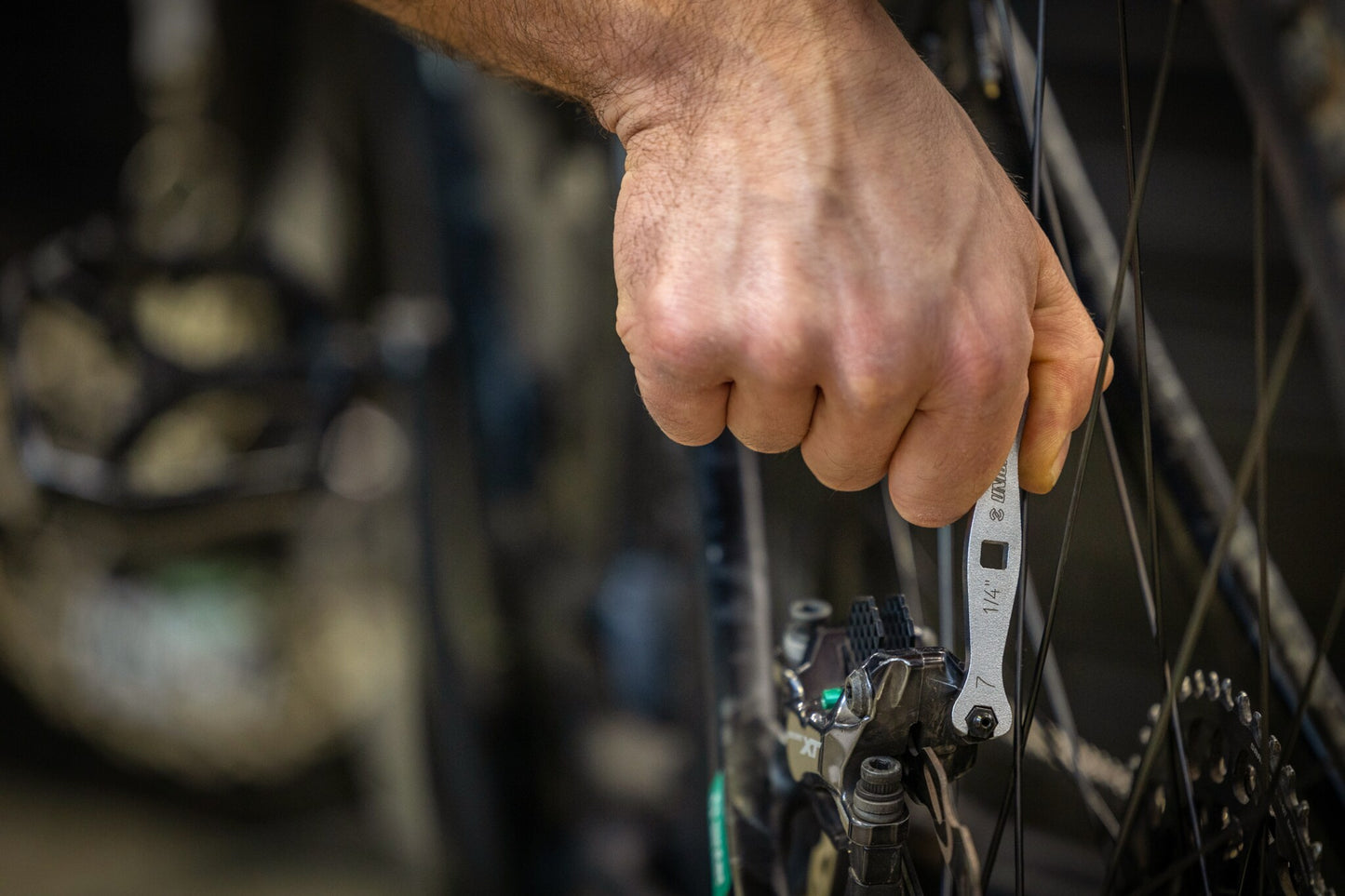
The Flare Nut Wrench 1760/2 is the torque-control wrench in the Unior hydraulic-brake kit: a five-sided flare-nut head at each end, sized to the 7 mm and 8 mm fittings that dominate current bicycle hydraulic-brake systems, with a 1/4″ square drive broached through the center of the body. It's the wrench that lets you torque a compression nut to manufacturer spec rather than snugging it by feel and hoping.
Compression-nut work on current bicycle brakes commonly lands in the 7 mm or 8 mm flat-to-flat range, which is what this wrench covers. The flare-nut head loads five of six flats on the fitting through the open slot, which is what stops a soft compression nut from rounding under torque. The central 1/4″ square drive matches Unior's own slipper torque wrench in the 2 to 24 Nm cycling-spec range (and the cycling-torque-wrench tier in general), so the same wrench that gets purchase on the fitting also delivers a calibrated torque reading from your bench wrench.
The low-profile body is the other reason this wrench lives on the brake-service bench. Compression nuts on integrated road bikes often sit in the gap between the caliper body and a tight cable port, where a thicker wrench either won't fit or fouls the line. The 1760/2 slips into that space because the head was designed to clear the line dress, not to look like a workshop wrench from a tool-truck catalog.
Specs
- Function: double-sided flare-nut wrench with built-in 1/4″ torque drive, for hydraulic compression nuts and bleed nipples
- Sizes: 7 mm and 8 mm; 87 mm overall, 4 mm head thickness, 27 g
- Six-point flare-nut profile (five flats engaged through the slot)
- Built-in central 1/4″ square drive, compatible with cycling torque wrenches
- Low-profile body for tight caliper-to-frame clearance
- Trivalent chrome plated
- Article number: 1760/2
Built in Zreče, Slovenia
Unior has been forging hand tools in Zreče since 1919, and sponsors professional road and mountain-bike race teams. The 1760-series wrenches are the bench wrenches of the brake-fluid era: small enough to live in a drawer, sized for the fittings that current systems actually use, and chromed to wipe clean of brake fluid between jobs. A 7+8 flare-nut with a built-in torque drive is the wrench that does the work most professionally-bled brake systems need done.
Pro tip from our mechanics
Bleeding a hydraulic brake is mostly a fluid-handling job; reassembling it is a torque job. Once the line is connected and bled, the compression nut wants to land at the manufacturer's torque spec exactly, not at “felt right when I stopped.” Plug the 1760/2's 1/4″ drive into a torque wrench from your cycling-torque kit, set the spec, and turn until the click. The procedure removes the over-torque-then-leak cycle that contaminates so many home-bled brakes. Our wrench-selection guide covers which fittings on which brake systems take which Unior wrench, and where the 1760/2's built-in torque drive is the deciding factor: Choosing the right wrench for hydraulic disc brake service →
FAQ
What do you use a flare nut wrench for on a bike? It tightens and loosens the compression nuts on hydraulic brake lines without rounding them. The six-point head passes the line through its open slot and bears on five of the fitting's six flats, so the soft nut takes the load across its faces instead of its corners.
Will the 1760/2 fit the compression nuts on my brakes? The flare ends are 7 mm and 8 mm, the flat-to-flat sizes that dominate compression nuts on current bicycle hydraulic brake systems, and the low-profile head reaches compression nuts that sit close against the cable port on integrated road frames.
How do I torque a brake line compression nut to spec? Seat a 1/4-inch cycling torque wrench in the square drive broached through this wrench's body, set the manufacturer's figure, and turn to the click. The flare end keeps its grip on the fitting while the torque wrench supplies the calibrated reading, in the 2 to 24 Nm range Unior's slipper torque wrench covers.
 Tech Tips
How to Bleed Disc Brakes: A Shimano and SRAM Walkthrough
Tech Tips
How to Bleed Disc Brakes: A Shimano and SRAM Walkthrough
