


This is the chainwhip for track, fixed-gear, and singlespeed bikes: the chain segment is sized for 1/8-inch cogs, not the narrower chain a multispeed whip uses. The handle end has a built-in lockring tool, so you hold the cog and free its lockring with one tool. A magnet parks the chain between pulls.
In stock
Couldn't load pickup availability
Free US shipping on orders $75+
Some exceptions apply — see shipping policy
Forged in Zreče, Slovenia since 1919. Sponsors professional road and mountain-bike race teams.
View full details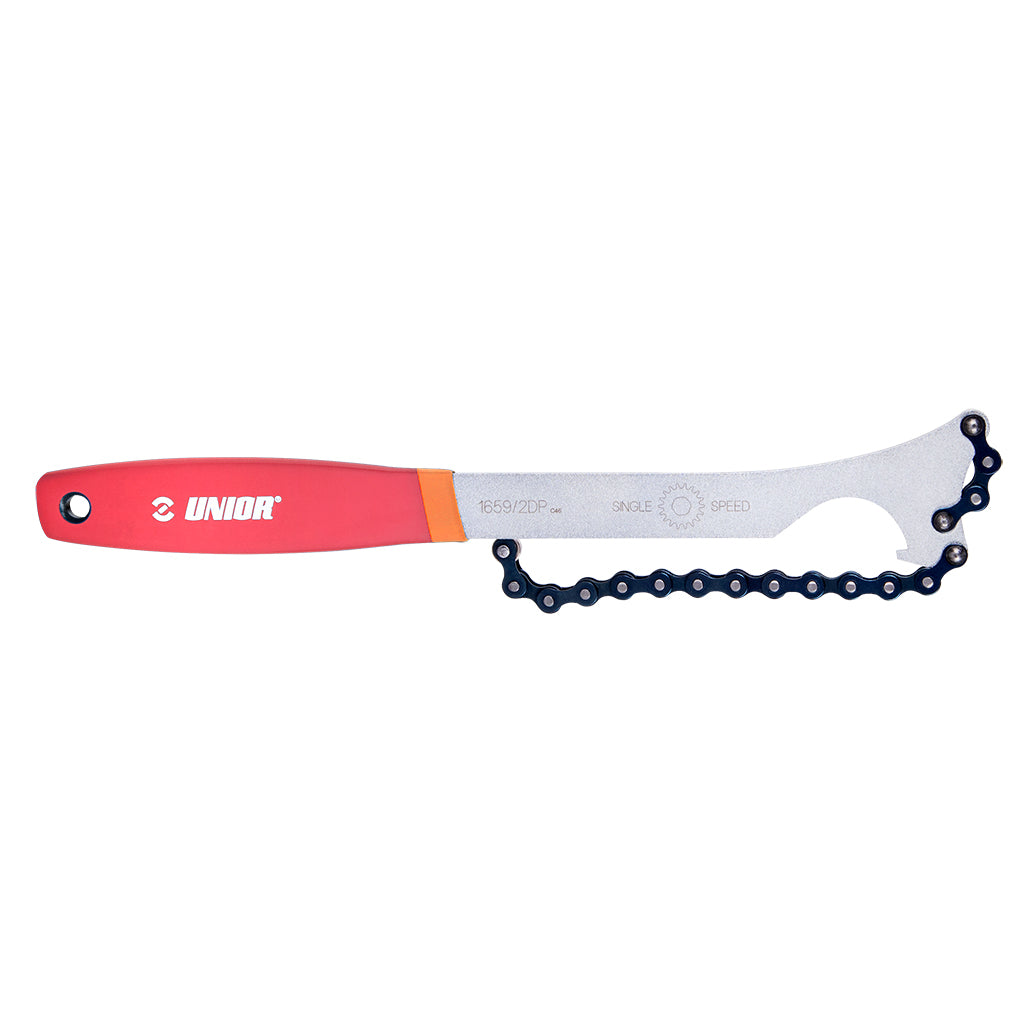
On this page
Single-speed and fixed-gear builds use a different chain; wider rollers, thicker plates; and a different lockring on the cog side. The 1659/2DP is the chainwhip sized for those bikes: heavier-gauge chain segment for the 1/8" cogs that fixed-gear builds run, plus an integrated lockring tool on the handle end for fixed-gear lockrings. One tool replaces what would otherwise be two on the bench.
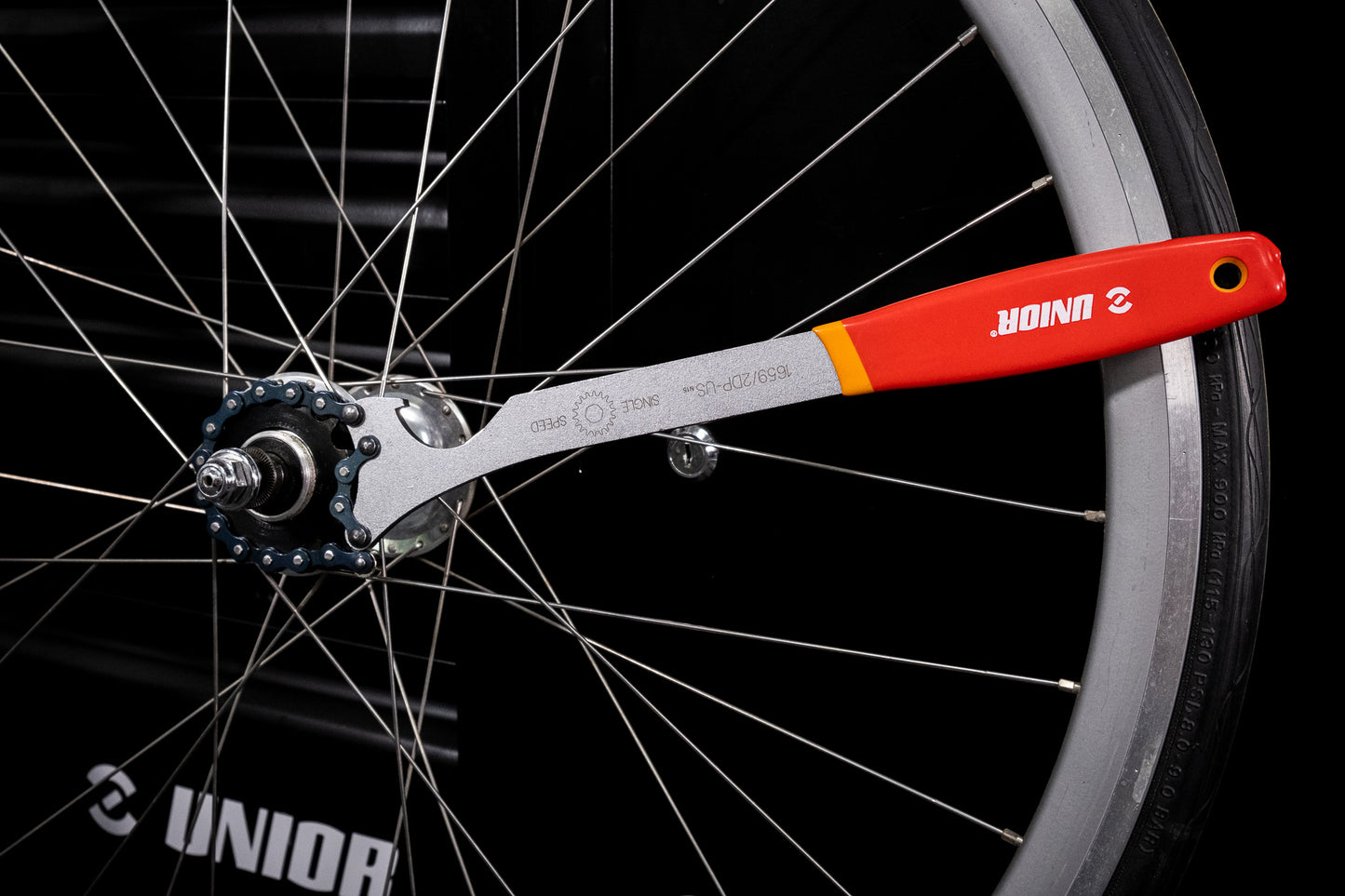
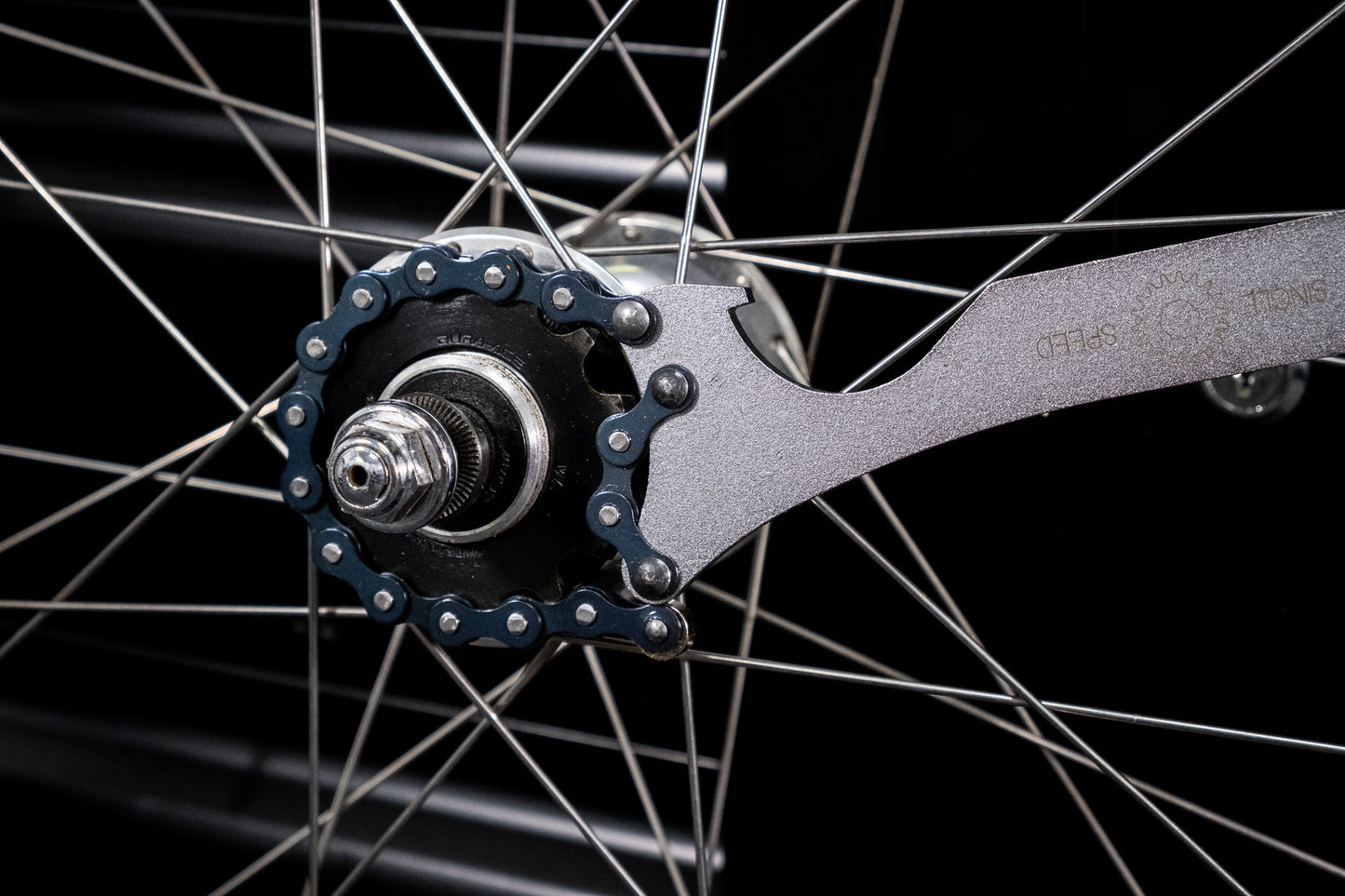
The integrated lockring tool is the design call that earns the 1659/2DP its place in the singlespeed-specific catalog. Fixed-gear hubs use a separate small lockring threaded over the cog itself (it's the reverse-threaded ring that holds the fixed cog against the freewheel-pattern threads on the hub body). Backing the lockring off used to mean reaching for a hook wrench or a flat lockring tool; the 1659/2DP has the engagement built into the handle, so the same tool that holds the cog still also breaks the lockring loose. Sequence: handle the lockring first, then flip the tool around and use the chain segment to hold the cog while you spin the cog off the hub threads.
The other upgrades on this version are the same as the multispeed chainwhip: a magnetic chain retainer in place of the old spring (the chain parks against the body when you set the tool down), and a double-dipped bi-material handle that stays positive under load.
How to use it
For the cog-lockring (the small ring threaded over the cog): seat the integrated lockring tool's hooks against the lockring's notches, then turn counter-clockwise. Fixed-gear cog lockrings are torqued lightly compared to cassette lockrings; they back off with hand force most of the time.
For the cog itself: wrap the chain segment around the cog and pull the handle counter-rotational to the direction you're trying to spin the cog. Fixed-gear cogs thread on conventionally (right-hand thread); freewheel-style singlespeed cogs thread the same direction. Standard freewheel-removal lockring tools go on the hub side; the chainwhip holds the cog still while a separate hub-side tool (e.g. Universal Single-Speed Freewheel Remover 1722/2BI-US) backs the cog off.
Compatibility
- 1/8" single-speed cogs (track, fixed-gear, single-speed road/MTB conversions)
- Fixed-gear cog lockrings (integrated tool on the handle)
- Not for multispeed derailleur cassettes (use Multispeed Chainwhip 1660/2DP-US)
Specs
- 1/8" chain segment for singlespeed/track cogs
- Integrated lockring tool on the handle end (for fixed-gear cog lockrings)
- Double-dipped ergonomic bi-material handle
- Magnetic chain retainer (replaces old spring design)
- Article number: 1659/2DP
Built in Zreče, Slovenia
Unior has been forging hand tools in Zreče since 1919, and sponsors professional road and mountain-bike race teams. The singlespeed chainwhip is the kind of tool that gets overlooked in catalogs sized around current road/MTB drivetrains; but track racing, fixed-gear riding, and singlespeed commuters are a real population, and the right tool for them is genuinely different from the multispeed version. The integrated lockring head on the 1659/2DP is the workshop detail that says someone who builds these bikes designed it.
Pro tip from our mechanics
If you're doing fixed-gear or singlespeed work specifically; track racing, bike-courier service, fixed-gear conversions; the 1659/2DP is the chainwhip you actually want, not the multispeed version with a too-narrow chain segment on a 1/8" cog. The chain segments aren't cross-compatible: a 3/32" chain on a 1/8" cog rides too high in the tooth gap and can slip under load. Pair the 1659/2DP with the Universal Single-Speed Freewheel Remover 1722/2BI-US for the full singlespeed-rear-end toolkit. The cassette-replacement workflow covers the singlespeed and track-bike sequence end-to-end: When and how to replace your cassette →
 Tech Tips
When and how to replace your cassette
Tech Tips
When and how to replace your cassette
