


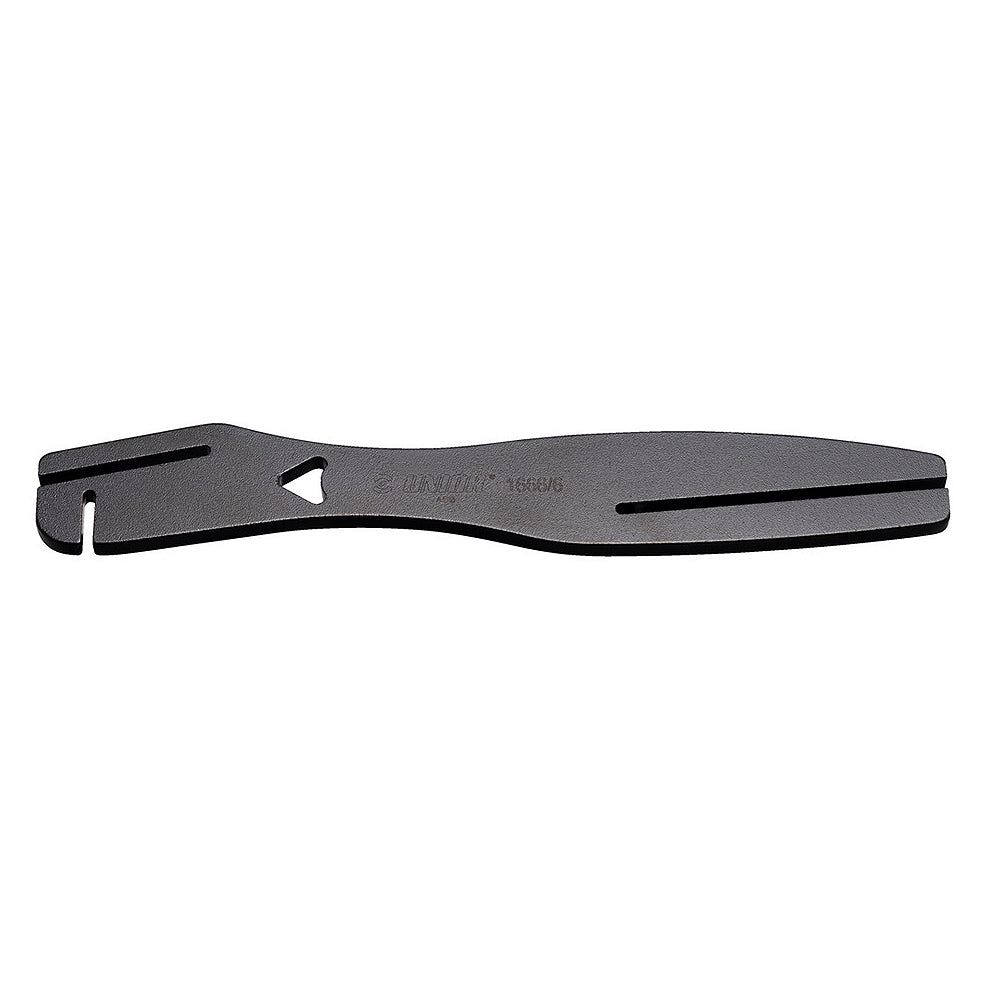
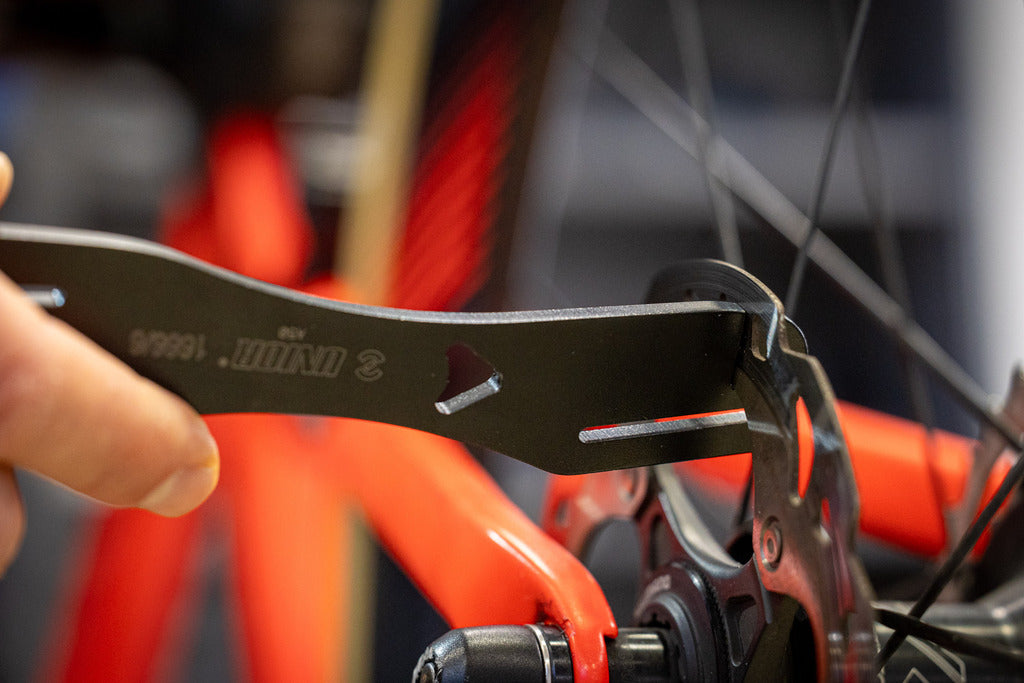
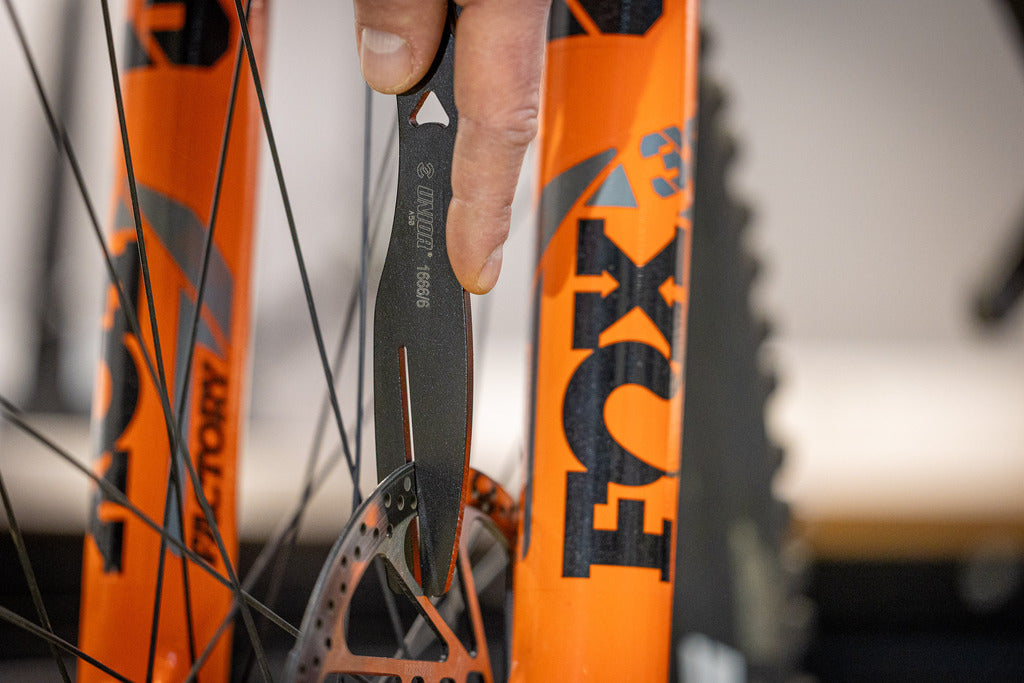
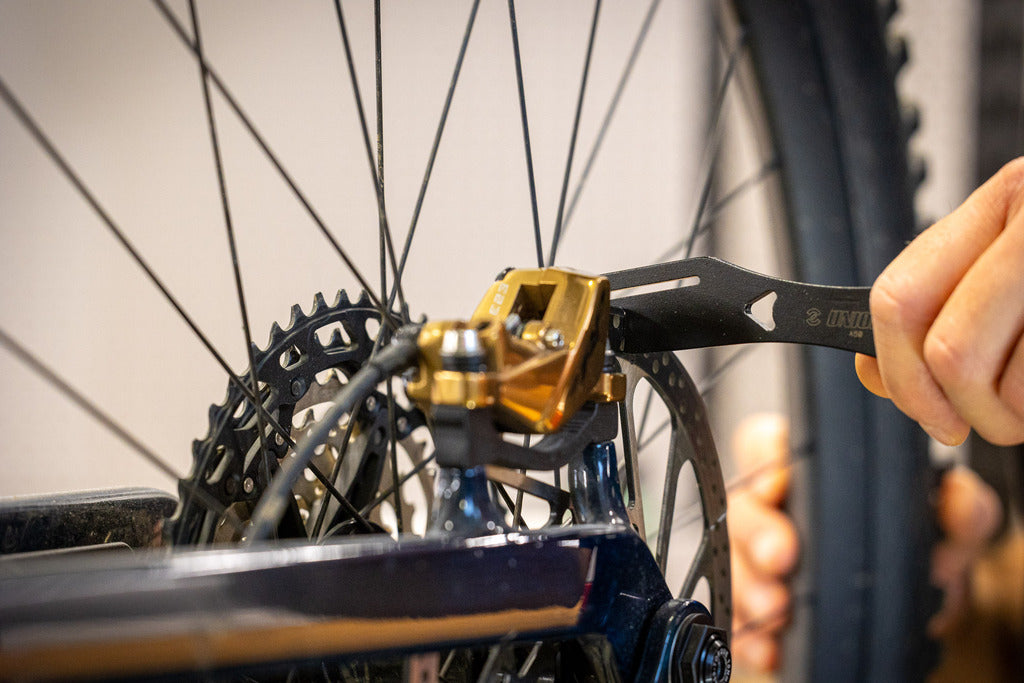
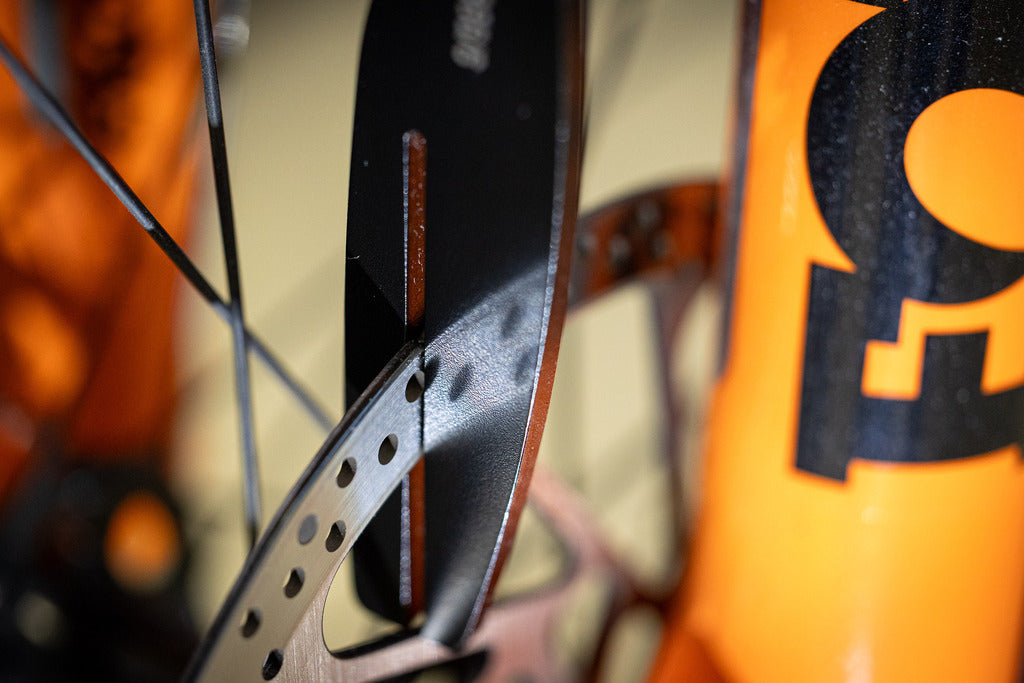
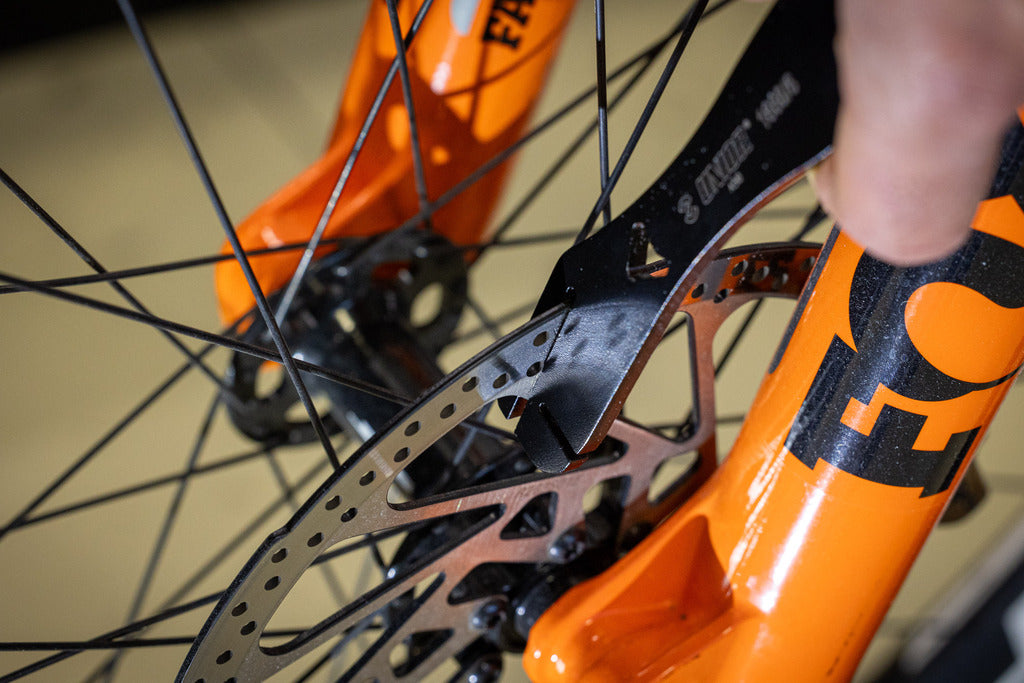
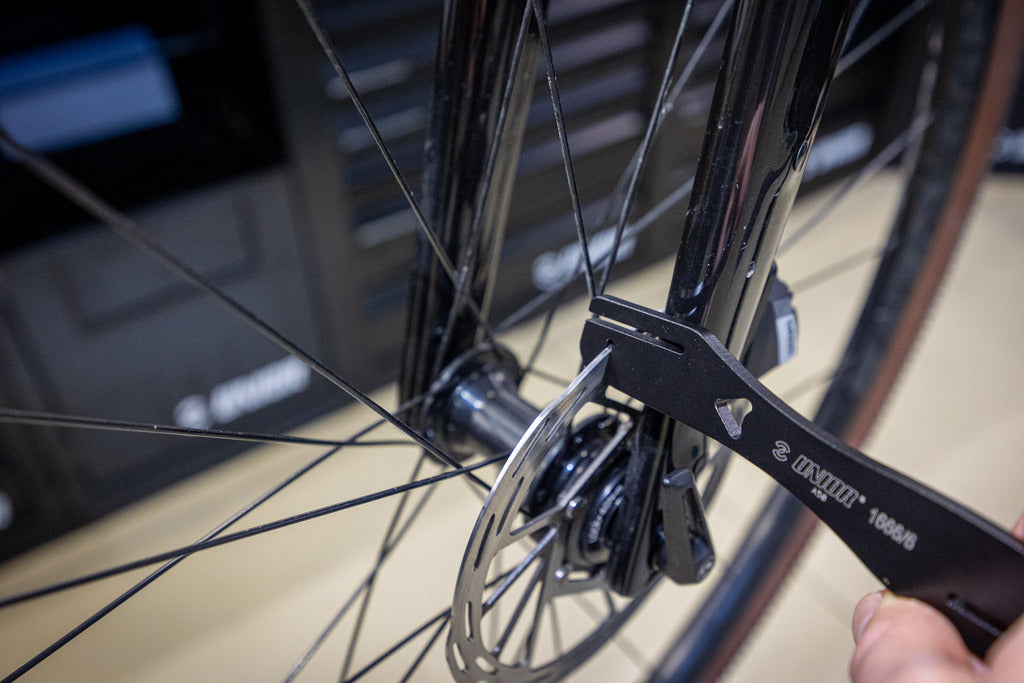
Straightening a rotor means leaning hard on the blade, and heat-treated tool steel is why the notch edges survive it without rounding off. Notches at several angles isolate the bend on discs up to 2.4 mm thick, and the wheel never leaves the bike.
In stock
Couldn't load pickup availability
Free US shipping on orders $75+
Some exceptions apply — see shipping policy
Forged in Zreče, Slovenia since 1919. Sponsors professional road and mountain-bike race teams.

On this page
A disc rotor that's even slightly out of true rubs the pads at every revolution. You hear it as a whisper under braking; you feel it as a pulse in the lever. Rotors warp under heat-cycling, take a set after a crash, or pull sideways when the rotor bolts get an uneven torque sequence during install. The Rotor Truing Fork 2.0 lets you correct the warp without removing the wheel: multiple notches at different angles give you leverage at the exact point the rotor needs to bend, and the laser-cut tool-steel blade takes the workload without flexing.
The notches seat over rotors up to 2.4 mm thick, which covers every road and MTB rotor we've measured against the fork in the workshop. After laser cutting, the blade is heat-treated, which is the difference that matters in use: the slot edges don't deform under the leverage you have to apply to bend a rotor. The slot edges hold their shape under the leverage that would deform mild steel.
This is a workshop tool, not a trailside one. At 158 g and 190 mm long it lives on the bench (there's a hole on the back for hanging), and it works the rotor while the wheel is still in the dropouts. You isolate the bent section against a notch and apply leverage perpendicular to the disc face. Small corrections, checked against the caliper's pad clearance, until the rub clears.
Specs
- Function: rotor truing fork for disc-brake rotors
- Construction: laser-cut tool steel, heat-treated
- Multiple notches for engaging the rotor at different angles
- Rotor thickness compatibility: up to 2.4 mm
- 190 × 30 × 5 mm
- 158 g
- Includes a hole for workshop hanging
- Article number: 1666-6
When truing is the right call
Truing has limits. A rotor that's been heat-cycled to discoloration in multiple spots is past saving; straightening it bends the metal back through grain that's no longer uniform. If the rotor is thinner than the manufacturer's published wear limit (Shimano's spec is 1.5 mm; check the stamping or spec sheet for your rotor), the answer is the same. That's a replacement, not a truing job. The fork is for the in-between case: a localized warp on a rotor that's otherwise within service spec.
Built in Zreče, Slovenia
Unior has been forging hand tools in Zreče since 1919, and sponsors professional road and mountain-bike race teams. The truing fork's laser-cut tool steel and heat treatment are workshop-grade decisions, not consumer-grade ones. You can tell the difference the first time you put load on the blade.
Pro tip from our mechanics
Always let calipers and rotors cool to ambient before truing. Hot rotors are softer and bend further than you intend, and a bent-too-far rotor is harder to true back than the original warp. Our disc-brake-rub guide covers how to tell whether truing will fix the rub or whether the rotor's already past the point where straightening helps: Fix disc brake rub →
FAQ
What tool do shops use to straighten a warped disc rotor? A rotor truing fork. The notches seat over the bent section at the angle you need, and the heat-treated tool-steel blade gives you the leverage to bend the rotor back toward true in small corrections, rechecking pad clearance as you go.
Do I need to remove the wheel to true a disc rotor? No. The fork works with the wheel still in the dropouts: isolate the bend against a notch, lever perpendicular to the disc face, and recheck clearance. The notches fit discs as thick as 2.4 mm, road or MTB.
Should the rotor be hot or cold when you true it? Cold, always at ambient temperature. A hot rotor is softer and bends more than you mean it to, and a rotor bent too far is harder to bring back than the original warp was to fix.
 Tech Tips
Fix Disc Brake Rub
Tech Tips
Fix Disc Brake Rub
